15 Protective Hairstyles for Black Kids That Help Reduce Breakage
The best protective hairstyles for Black kids are styles that reduce daily manipulation, protect the ends of the hair, minimize tension on the scalp, and fit comfortably into your child’s daily routine.
Hairstyles such as two-strand twists, flat twists, cornrows, and braided buns can all help reduce breakage when installed and maintained properly. https://kiddieshairhub.com/wp-admin/post.php?post=371&action=edit
Protective hairstyles for Black kids
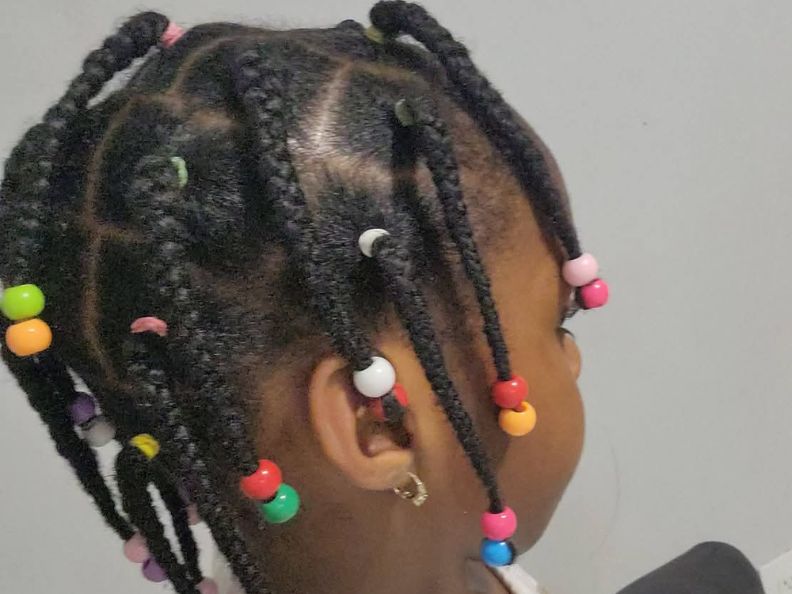
If you’ve ever spent hours styling your child’s hair only to notice broken strands a few days later, you’re not alone.
Many parents assume that any braided hairstyle automatically protects natural hair.
However, the truth is that some hairstyles help reduce breakage much better than others.
The best protective hairstyles for Black kids are not simply the ones that last the longest or receive the most compliments.
They are the hairstyles that protect delicate strands, reduce unnecessary manipulation, and keep children comfortable while allowing their natural hair to thrive.
Choosing the right hairstyle can make wash day easier, reduce tangles, help retain length, and encourage healthier hair over time.
If you’re still learning about choosing styles based on your child’s curl pattern and hair needs, our article on How to Choose the Right Protective Hairstyle for Your Child’s Hair Type is a helpful place to start before exploring the hairstyle ideas below.
Let’s look at fifteen protective hairstyles that combine practicality, comfort, and healthy hair care.
What Makes a Hairstyle Truly Protective?
Before choosing a hairstyle, it’s important to understand what “protective” really means.
A hairstyle should do much more than keep the hair neat.
It should:
- Reduce daily manipulation.
- Protect the ends of the hair.
- Avoid excessive pulling around the hairline.
- Allow regular moisturizing.
- Keep the scalp comfortable.
- Be appropriate for your child’s age and activity level.
If a hairstyle causes pain, leaves bumps around the edges, or makes it difficult to care for the scalp, it is not protecting your child’s hair, no matter how beautiful it looks.
1. Two-Strand Twists
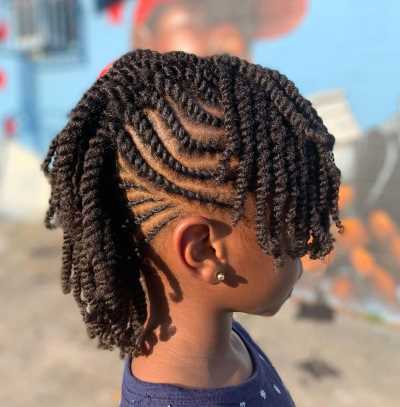
Two-strand twists remain one of the most recommended protective hairstyles for Black kids because they are simple, versatile, and gentle on natural hair.
They work well for children of different ages and can easily be refreshed without completely redoing the hairstyle.
Best for:
Medium to long natural hair
Installation Time:
30–60 minutes
Typical Wear Time:
1–2 weeks
Why It Helps Reduce Breakage
- Reduces daily combing.
- Keeps the ends protected.
- Makes moisturizing easier.
- Can be styled into buns or ponytails during the week.
Maintenance Tip
Sleep with a satin bonnet or use a satin pillowcase to help the twists stay neat and reduce friction overnight.
2. Chunky Flat Twists
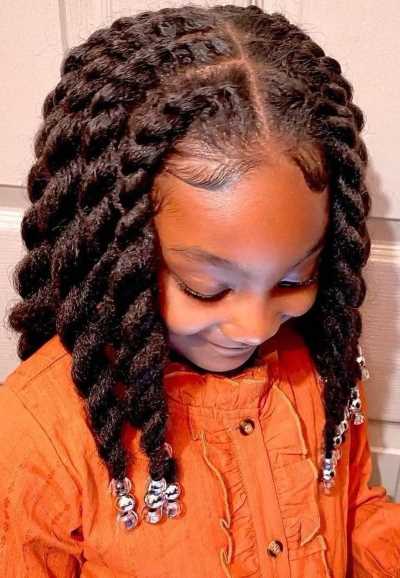
Flat twists are an excellent option for parents looking for a hairstyle that is quicker to install than individual braids.
Because fewer sections are created, installation is often faster while still protecting the hair.
Best for:
Medium-length natural hair
Installation Time:
20–45 minutes
Typical Wear Time:
About one week
Why It Helps Reduce Breakage
- Less daily manipulation.
- Easier detangling on wash day.
- Comfortable for younger children.
- Helps keep the hair stretched, reducing knots.
3. Straight-Back Cornrows
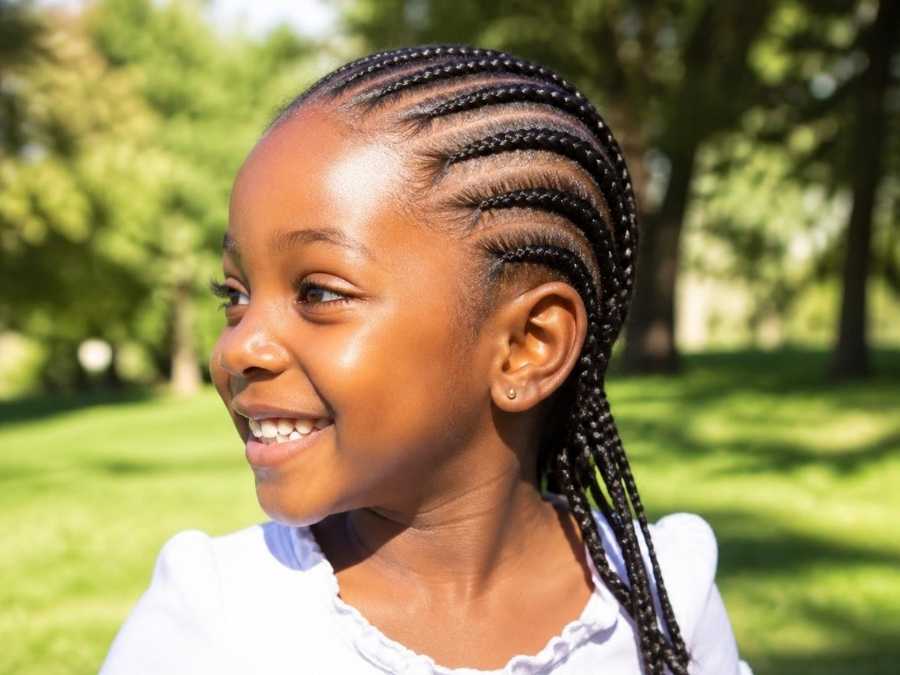
Simple straight-back cornrows have remained popular for generations because they are practical and easy to maintain.
When braided with gentle tension, they help organize the hair while reducing daily styling.
Best for:
Medium to long hair
Installation Time:
45–90 minutes
Typical Wear Time:
1–2 weeks
Why It Helps Reduce Breakage
- Prevents frequent brushing.
- Keeps hair neatly secured.
- Suitable for school and sports.
- Helps reduce tangling.
Parent Tip
Cornrows should feel secure but never painful.
If your child cannot sleep comfortably after installation, the braids may be too tight.
4. Mini Twists
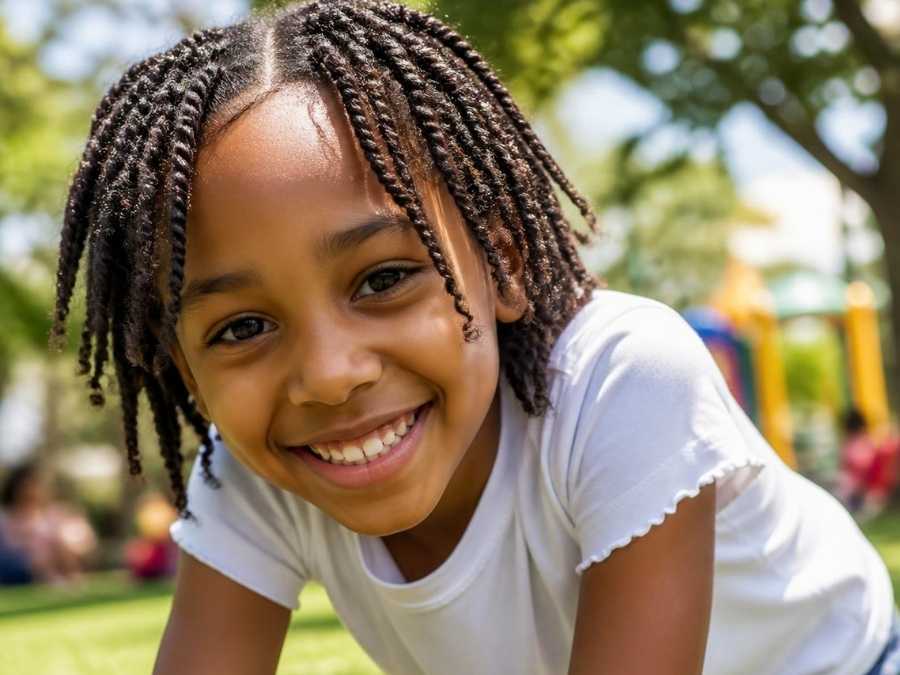
Mini twists provide excellent flexibility because they can be worn loose or styled into different looks throughout the week.
They also make it easier to access the scalp for moisturizing.
Best for:
Medium to long natural hair
Installation Time:
1–2 hours
Typical Wear Time:
2–3 weeks
Why It Helps Reduce Breakage
- Protects the ends.
- Allows easy moisturizing.
- Reduces daily manipulation.
- Offers several styling options without reinstalling the hairstyle.
5. Braided Bun
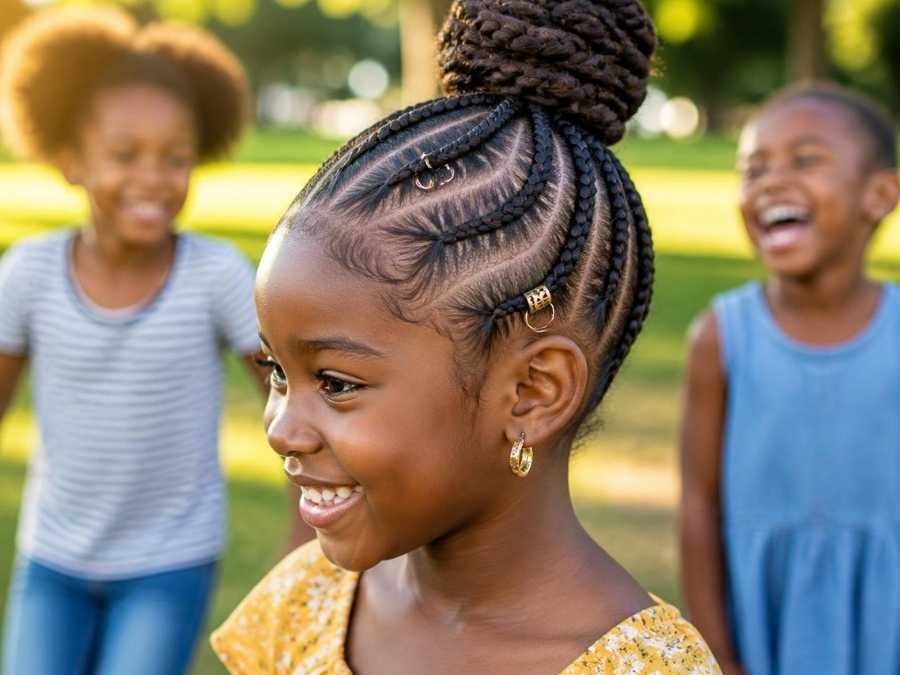
A braided bun combines protective braiding with the added benefit of tucking the ends away safely.
It is especially useful for school days and formal occasions.
Best for:
Medium to long hair
Installation Time:
45–75 minutes
Typical Wear Time:
About one week
Why It Helps Reduce Breakage
- Ends remain protected.
- Hair stays organized.
- Reduces friction during daily activities.
- Suitable for active children.
Why Comfortable Hairstyles Protect Hair Better
Some parents believe that tighter hairstyles last longer.
While this may seem true at first, excessive tension often causes more harm than good.
Tight hairstyles can lead to:
- Hairline breakage.
- Scalp tenderness.
- Headaches.
- Difficulty sleeping.
- Increased stress on delicate strands.
One comfortable hairstyle that lasts slightly fewer days is usually much healthier than a hairstyle that causes pain for an entire week.
Healthy natural hair should never come at the expense of your child’s comfort.
Kiddies Hair Hub Parent Corner
One of the easiest ways to reduce breakage is to stop judging hairstyles by how neat they look on the first day.
Instead, ask yourself:
“Will this hairstyle still be protecting my child’s hair a week from now?”
A hairstyle that allows moisture, remains comfortable, and prevents unnecessary tangles is doing its job, even if it develops a little frizz along the way.
A little frizz is normal.
Healthy hair is far more important than perfectly smooth braids.
Quick Win
Before installing any hairstyle, gently stretch the hair after moisturizing.
Working on slightly stretched hair can make sectioning easier, reduce tangles during styling, and help create neat parts without excessive pulling.
6. Halo Braid
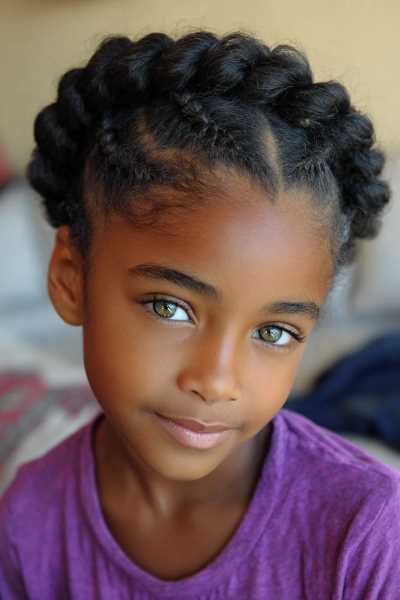
The halo braid is both elegant and practical.
It wraps around the head, keeping the hair secure while protecting the ends from constant friction.
Although it’s often chosen for birthdays, weddings, and church services, it also works well as an everyday hairstyle for children who enjoy wearing their hair away from their face.
Best for: Medium to long natural hair
Installation Time: 45–60 minutes
Typical Wear Time: About one week
Why It Helps Reduce Breakage
- Keeps the ends tucked away.
- Reduces daily manipulation.
- Prevents hair from rubbing against clothing.
- Works well for both casual and special occasions.
Maintenance Tip
Cover the hair with a satin bonnet or scarf at bedtime to help the braid stay neat for longer.
7. Bantu Knots
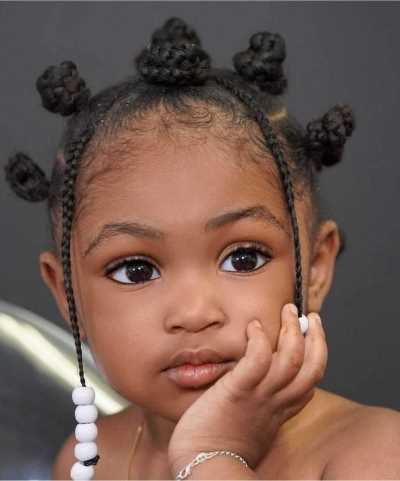
Bantu knots are a classic protective style that helps keep natural hair neatly sectioned while protecting the ends.
They are especially useful for children with thick, coily hair because they help reduce tangling during the week.
Best for: Medium to long natural hair
Installation Time: 30–45 minutes
Typical Wear Time: 1–2 weeks
Why It Helps Reduce Breakage
- Keeps the hair stretched.
- Protects delicate ends.
- Reduces knots and tangles.
- Can create a beautiful curl pattern when taken down.
Parent Tip
Create medium-sized knots rather than very small ones.
This helps reduce installation time and places less stress on the scalp.
8. Flat Twists into a Bun
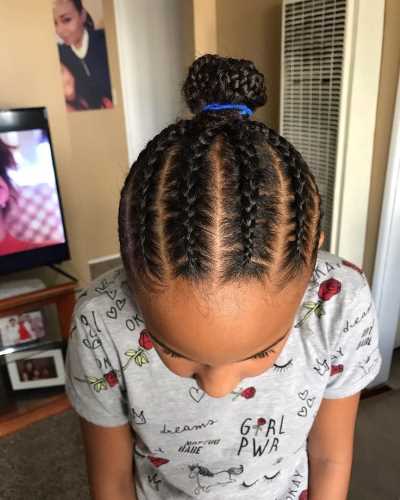
This hairstyle combines the protection of flat twists with the simplicity of a low or high bun.
It keeps the hair secure while giving children a neat appearance for school and family events.
Best for: Medium to long hair
Installation Time: 35–60 minutes
Typical Wear Time: About one week
Why It Helps Reduce Breakage
- Protects the ends by tucking them into the bun.
- Reduces daily styling.
- Keeps hair off the face.
- Comfortable for active children.
9. Braided Ponytail
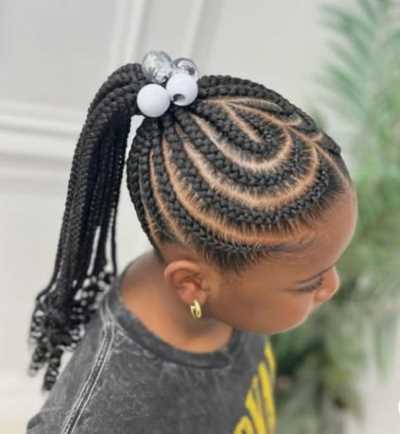
A braided ponytail is one of the most practical protective hairstyles for Black kids because it combines durability with simplicity.
The braids help prevent tangling, while the ponytail makes everyday activities more comfortable.
Best for: Medium to long hair
Installation Time: 45–75 minutes
Typical Wear Time: 1–2 weeks
Why It Helps Reduce Breakage
- Keeps strands organized.
- Helps reduce friction.
- Makes morning routines easier.
- Suitable for school, sports, and outdoor play.
Maintenance Tip
Avoid pulling the ponytail too tightly with elastic bands. Soft, fabric-covered hair ties are usually gentler on natural hair.
10. Stitch Braids
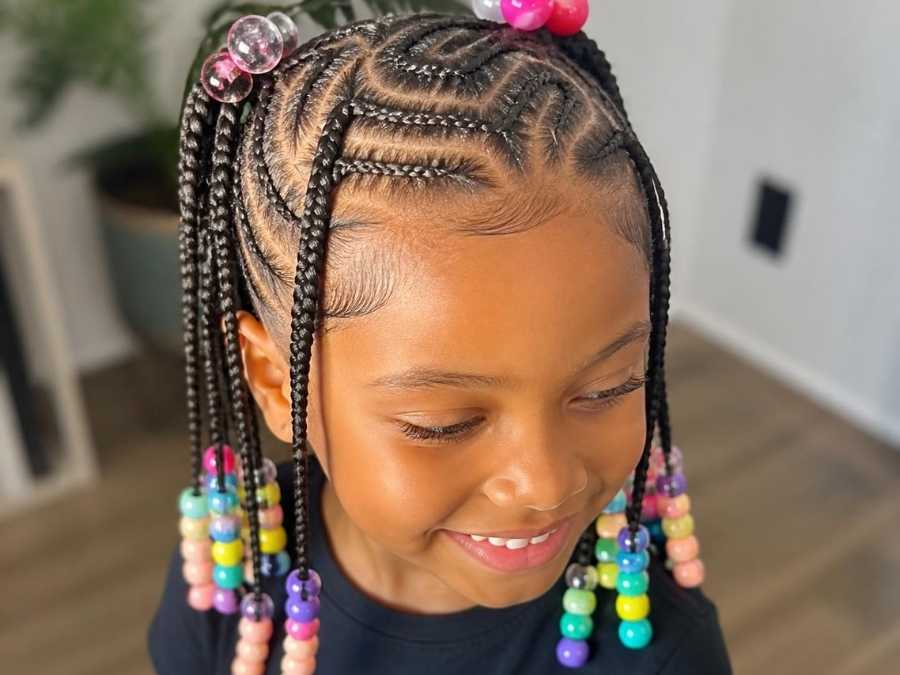
Stitch braids are known for their clean, defined sections.
While they require more precision during installation, they can be an excellent protective option when braided with gentle tension.
Best for: Medium to long natural hair
Installation Time: 1½–3 hours
Typical Wear Time: 2–3 weeks
Why It Helps Reduce Breakage
- Keeps hair neatly sectioned.
- Reduces the need for daily styling.
- Helps prevent tangling.
- Works well for children with busy schedules.
Parent Tip
Neat stitch braids should never feel painful. A child should be able to smile, sleep, and play comfortably after the hairstyle is finished.
How to Choose the Right Protective Style for Your Child
Every child has unique hair needs, so there is no single hairstyle that works for everyone.
When deciding which protective style to choose, think about these factors.
Hair Length

Shorter hair often works well with styles such as:
- Two-strand twists.
- Mini puffs.
- Chunky flat twists.
Longer hair provides more flexibility for:
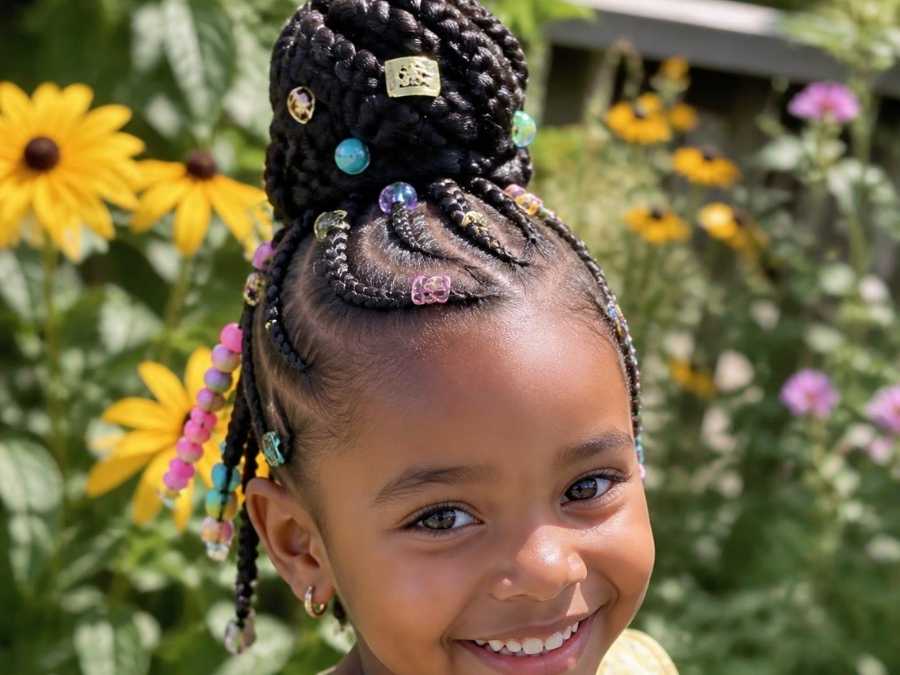
- Braided buns.
- Halo braids.
- Stitch braids.
- Bantu knots.
Activity Level
Children who spend a lot of time running, playing sports, or participating in outdoor activities usually benefit from hairstyles that keep the hair securely in place.
Styles such as straight-back cornrows, braided ponytails, and flat twists are often excellent choices because they require minimal daily adjustments.
Age
Toddlers generally need quick, comfortable hairstyles that don’t require sitting still for long periods.
School-age children can often tolerate more detailed styles, provided they remain comfortable and are not installed too tightly.
Choosing a hairstyle that matches your child’s age and patience level can make hair day a much more positive experience.
Common Mistakes That Can Lead to Breakage
Even the best hairstyle may not protect the hair if it isn’t installed or maintained correctly.
Some of the most common mistakes include:
- Braiding the hair too tightly.
- Leaving hairstyles in for too long.
- Skipping regular moisturizing.
- Ignoring signs of scalp irritation.
- Using hair accessories that snag or pull the hair.
- Restyling the edges every day.
Avoiding these habits can make a noticeable difference in your child’s overall hair health.
Kiddies Hair Hub Parent Corner
Many parents worry that a hairstyle will become frizzy after a few days.
A small amount of frizz is completely normal.
It doesn’t mean the hairstyle has failed.
In fact, constantly redoing braids or tightening loose sections often causes more damage than simply allowing a little natural wear.
Healthy hair should always take priority over perfectly neat hair.
Quick Win
After installing a protective hairstyle, check in with your child later that evening.
Ask if any area feels sore or uncomfortable.
If they mention pain around the edges or scalp, make adjustments early instead of hoping the discomfort will disappear on its own.
11. Mini Box Braids
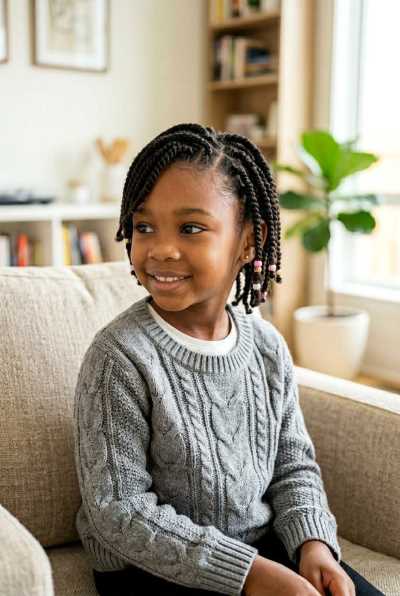
Mini box braids are a popular choice for parents looking for a long-lasting hairstyle that offers styling flexibility.
They can be worn loose, gathered into ponytails, or styled into buns throughout the week.
Best for: Medium to long natural hair
Installation Time: 2–4 hours
Typical Wear Time: 2–3 weeks
Why It Helps Reduce Breakage
- Reduces daily manipulation.
- Makes morning routines easier.
- Keeps the hair organized.
- Offers multiple styling options without reinstalling the hairstyle.
Maintenance Tip
Keep the braids moisturized with a lightweight leave-in conditioner or moisturizing spray, paying special attention to the ends.
12. Two Puff Protective Style
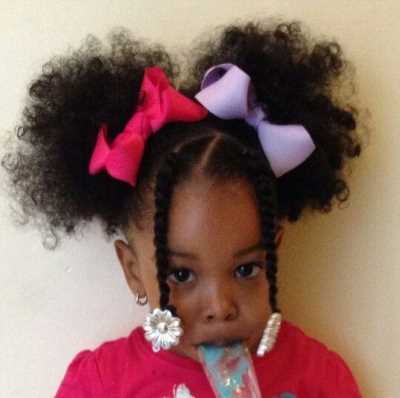
The two-puff hairstyle is simple, quick, and ideal for younger children.
While it isn’t designed to last for weeks, it reduces unnecessary combing and allows children to comfortably wear their natural curls.
Best for: Short to medium-length hair
Installation Time: 10–15 minutes
Typical Wear Time: 2–3 days
Why It Helps Reduce Breakage
- Minimal tension.
- Quick to install.
- Comfortable for toddlers and preschoolers.
- Easy to refresh without completely restyling.
13. Side Cornrows with Twists
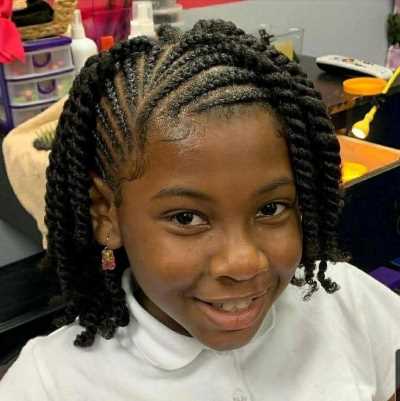
This hairstyle combines neat cornrows along one side with twists through the remaining sections of the hair.
It offers a stylish look while protecting the hair from excessive manipulation.
Best for: Medium to long natural hair
Installation Time: 45–75 minutes
Typical Wear Time: 1–2 weeks
Why It Helps Reduce Breakage
- Keeps the front of the hair secure.
- Makes moisturizing easy.
- Reduces tangling.
- Suitable for school and everyday wear.
14. Crown Flat Twists
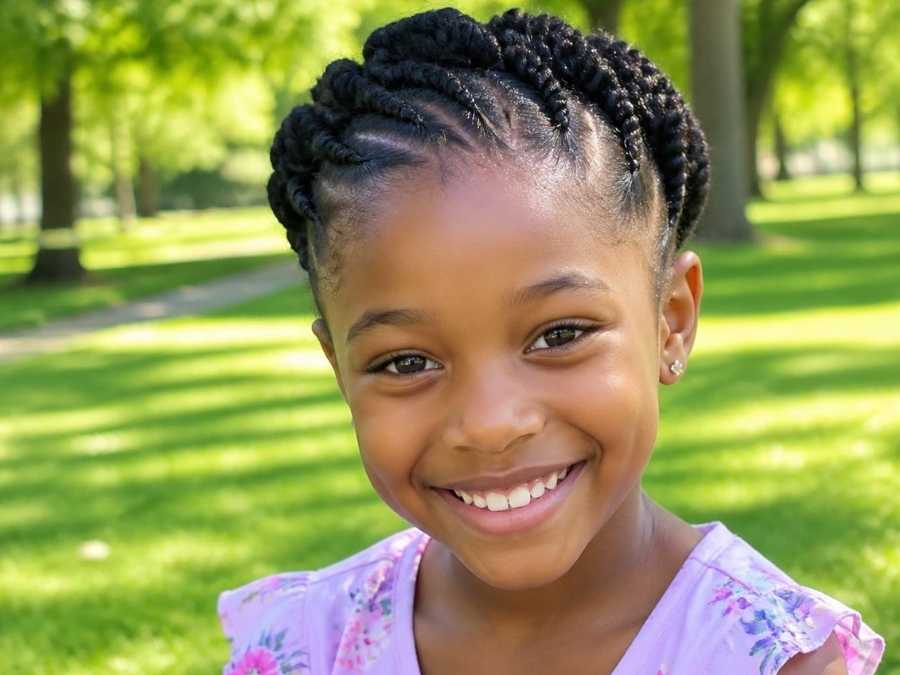
Crown flat twists create a beautiful hairstyle that wraps around the head while keeping the ends safely tucked away.
Parents often choose this style because it looks elegant without requiring complicated maintenance.
Best for: Medium-length hair
Installation Time: 30–45 minutes
Typical Wear Time: About one week
Why It Helps Reduce Breakage
- Protects the ends.
- Reduces friction against clothing.
- Comfortable for sleeping.
- Easy to refresh if small sections become loose.
15. Low Twisted Bun
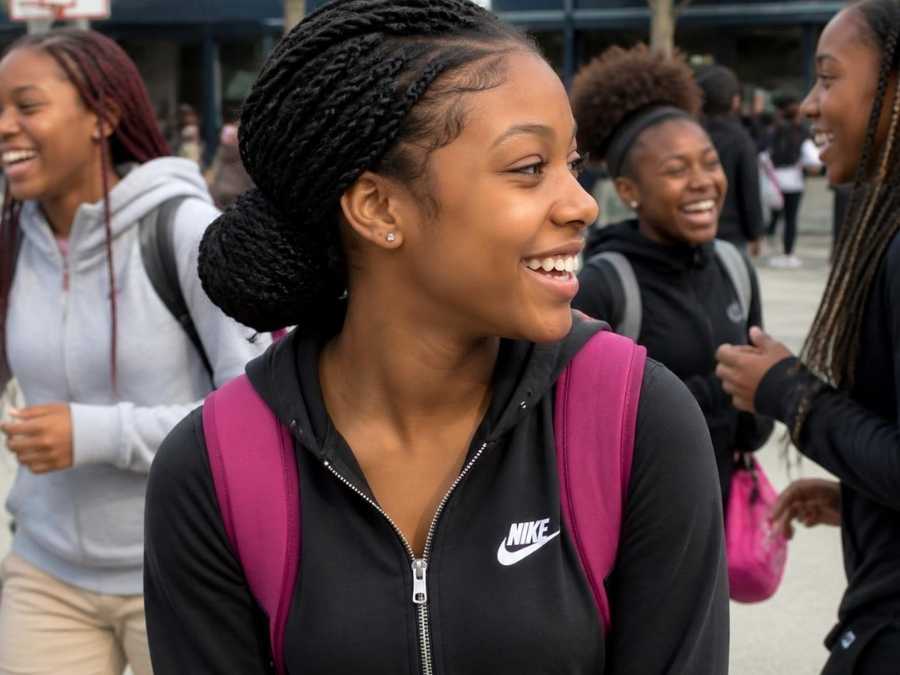
The low twisted bun is a simple protective hairstyle that works well for school, family gatherings, and special occasions.
By keeping the hair gathered neatly at the back, it helps reduce friction while protecting the ends.
Best for: Medium to long hair
Installation Time: 20–40 minutes
Typical Wear Time: Several days to one week
Why It Helps Reduce Breakage
- Keeps the ends tucked away.
- Requires minimal daily styling.
- Comfortable for most children.
- Works well with school uniforms and sports activities.
Which Protective Hairstyle Should You Choose?
The right hairstyle depends on your child’s individual needs.
Use this guide to help narrow your options.
| If your child… | Consider… |
| Has short natural hair | Two puff hairstyle, chunky flat twists, two-strand twists |
| Has medium-length hair | Halo braid, braided ponytail, crown flat twists |
| Has long natural hair | Mini box braids, stitch braids, braided bun |
| Plays sports regularly | Straight-back cornrows, braided ponytail, flat twists |
| Is very young | Mini puffs, two puff hairstyle, chunky twists |
| Prefers low-maintenance styles | Mini twists, box braids, Bantu knots |
How to Make Protective Hairstyles Last Longer
A well-installed hairstyle will last even better when it’s cared for properly.
Simple habits can help keep the style looking neat while protecting your child’s hair.
- Cover the hair with a satin bonnet or use a satin pillowcase at night.
- Moisturize the hair whenever it begins to feel dry.
- Keep the scalp clean to prevent product buildup.
- Avoid adding excessive tension when refreshing ponytails or buns.
- Remove hairstyles before they become severely tangled or difficult to manage.
Remember, the goal is healthy hair, not simply making a hairstyle last as long as possible.
Frequently Asked Questions
How long should children wear protective hairstyles?
The answer depends on the hairstyle, your child’s hair type, and how well the style is maintained.
Instead of focusing only on the calendar, watch for signs that the style is becoming dry, loose, or difficult to keep clean.
Can protective hairstyles damage hair?
They can if they are installed too tightly, left in for too long, or not maintained properly.
A protective hairstyle should never cause pain or place excessive stress on the scalp.
Should I wash my child’s hair while it’s in a protective style?
Yes.
Keeping the scalp clean is an important part of healthy hair care.
The method you use will depend on the hairstyle and your child’s individual needs.
Do protective hairstyles make hair grow faster?
No.
Hair growth happens naturally from the scalp.
Protective hairstyles help reduce breakage, allowing children to retain more of the hair they naturally grow.
Kiddies Hair Hub Parent Corner
Protective styling isn’t about creating perfect hairstyles every week.
It’s about making thoughtful choices that help your child’s hair stay healthy over time.
Some weeks, that may mean simple twists.
Other weeks, it may be neat cornrows or a braided bun.
The hairstyle itself is only one part of the journey.
Gentle detangling, regular moisturizing, patience, and consistency are what truly support healthy natural hair.
Quick Takeaways
- Choose hairstyles based on your child’s hair type, age, and daily routine.
- Comfortable hairstyles protect the hair better than tight hairstyles.
- Continue moisturizing and caring for the hair while it’s in a protective style.
- Rotate hairstyles occasionally to reduce repeated stress on the same areas.
- Healthy hair habits are more important than following hairstyle trends.
Finding the best protective hairstyles for Black kids doesn’t have to be complicated.
The healthiest styles are those that reduce daily manipulation, protect delicate ends, and allow your child to play, learn, and sleep comfortably.
Whether you choose two-strand twists, cornrows, mini twists, braided buns, or Bantu knots, the most important thing is that the hairstyle supports your child’s natural hair instead of placing unnecessary stress on it.
With consistent care and gentle styling, protective hairstyles can become an important part of a healthy hair care routine that helps reduce breakage and makes everyday hair care easier for both parents and children.
At Kiddies Hair Hub, our goal is to help parents make confident hair care decisions through practical advice, simple routines, and hairstyles that truly support healthy natural hair.
CREATIVE STEP-BY-STEP KIDS’ BRAIDS TUTORIALS
Best Hairstyles for Kids With Short Natural Hair
Easy School Hairstyles for Kids That Stay Neat All Day
Best Hairstyles for Kids With Short Natural Hair
Best Protective Hairstyles for Toddlers: Gentle Styles That Keep Little Hair Healthy
How Long Should Children Keep Protective Hairstyles? A Parent’s Guide to Healthy Timing
Why Protective Hairstyles Help Children Retain Healthier Hair
How to Choose the Right Protective Hairstyle for Your Child’s Hair Type
Leave a Reply