Protective hairstyles for hair growth
Protective hairstyles do not make children’s hair grow faster, but they can help children retain more of the hair they naturally grow.
By reducing daily manipulation, minimizing tangles, protecting delicate hair ends, and encouraging consistent hair care, styles such as cornrows, twists, and flat twists can help reduce breakage and support healthier-looking hair over time.
TABLE OF CONTENTS
- Introduction
- What Hair Growth Really Means
- Why Children’s Hair Breaks Easily
- How Protective Hairstyles Support Hair Retention
- What Protective Hairstyles Actually Do (and Don’t Do)
- Best Styles for Hair Retention
- Early Hair Care Habits That Matter
- Common Misunderstandings About Protective Styling
Many parents notice something interesting after removing their child’s braids or twists, the hair looks longer, fuller, and healthier than before.
This often leads to a common belief that protective hairstyles help hair grow faster.
But hair growth itself is not actually changing.
What is changing is something more important: how much of that growth is being preserved.
Children’s hair grows continuously, but it is also highly exposed to daily friction, tangling, rough detangling, dryness, and styling stress.
When these factors are not managed well, hair breaks off before it can show visible length.
Protective hairstyles are designed to reduce that constant stress.
When done correctly, they help the hair remain in a more stable condition so that less of it is lost to breakage.
Understanding this difference, between growth and retention, is the key to using protective styling effectively and safely for children.
Let us look at some of the protective hairstyles for hair growth that actually works. https://pin.it/6HxUqVzQo
WHAT HAIR GROWTH REALLY MEANS
Hair growth is a biological process that happens at the scalp level.
Every child’s hair grows at a rate influenced by genetics, health, nutrition, and age.
However, visible length is not just about growth. It is also about retention.
Two important concepts:
- Growth: New hair being produced at the scalp
- Retention: How much of that hair stays on the head without breaking off
Many parents assume slow growth when in reality, the hair is growing but breaking at almost the same rate.
This is especially common in children with curly and coily hair textures, where strands are more fragile and prone to dryness.
WHY CHILDREN’S HAIR BREAKS EASILY
Children are naturally active, and their hair goes through a lot during the day.
Breakage often happens without parents realizing it.
Common causes include:
- Frequent combing and detangling
- Dry hair that lacks moisture
- Rough handling during styling
- Sleeping on cotton pillowcases
- Tight hairstyles that stress the scalp
- Tangles forming during play
- Lack of consistent moisture routine
Over time, these small factors add up and reduce visible hair length even when growth is happening normally.
HOW PROTECTIVE HAIRSTYLES SUPPORT HAIR RETENTION
Protective hairstyles help reduce breakage by changing how the hair is handled daily.
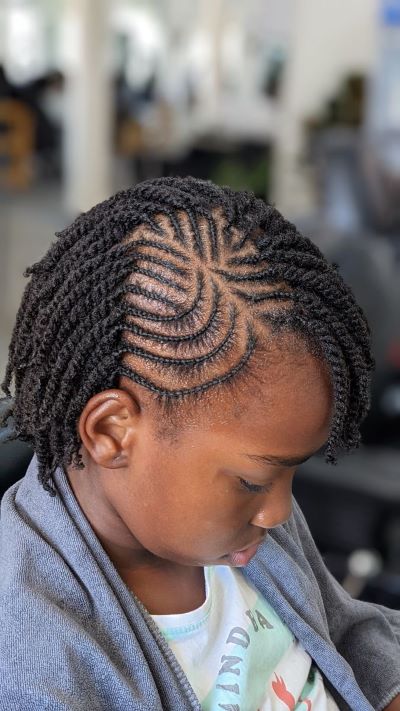
1. Reduced daily manipulation
Photocredithttps://pin.it/4FXg0rOBi
When hair is styled into braids, twists, or cornrows, it does not need to be combed or brushed every day.
This reduces stress on the strands.
This is one of the best protective hairstyles for hair growth you should consider.
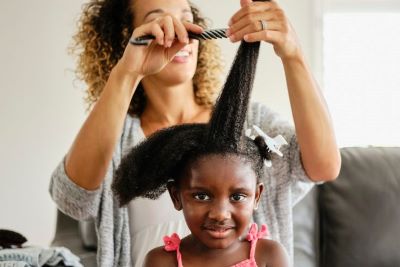
2. Protection of hair ends
Photocredithttps://pin.it/5rFBia8wj
Hair ends are the oldest and weakest part of the strand.
Protective styles help tuck them away and reduce friction.
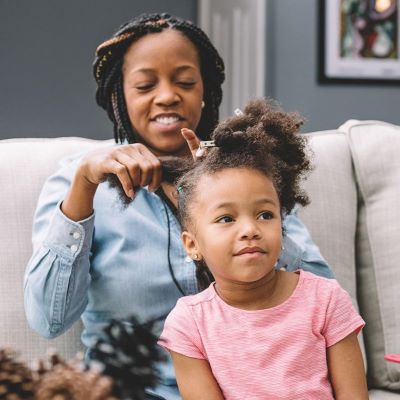
3. Less tangling
Photocredithttps://pin.it/5YiMcaur7
Grouped hair strands are less likely to knot, especially during sleep or active play.
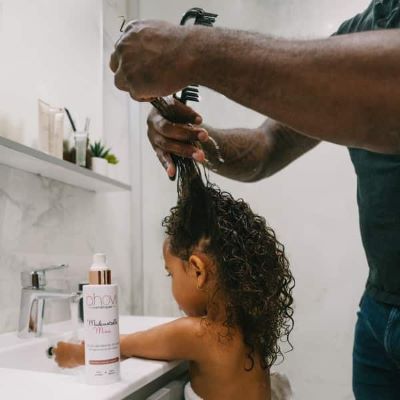
4. Better moisture control
Photocredithttps://pin.it/73UHvgWDF
Moisturized hair is more flexible and less likely to snap.
Protective styles help maintain moisture when properly maintained.
This is a good routine for protective hairstyles for hair growth
WHAT PROTECTIVE HAIRSTYLES DO (AND DON’T DO)
They DO:
- Reduce breakage
- Minimize daily styling stress
- Help retain length
- Make detangling easier
- Support healthier hair routines
They DO NOT:
- Change how fast hair grows
- Guarantee thicker hair
- Replace proper moisture care
- Fix damage caused by tight styling
Protective styles work best as part of a complete hair care routine, not as a standalone solution.
BEST STYLES FOR HAIR RETENTION
Some styles are more effective than others depending on comfort and maintenance.
| Style | Best For | Benefit |
| Two-strand twists | Toddlers & sensitive scalps | Gentle and lightweight |
| Cornrows | Active children | Low daily maintenance |
| Flat twists | Fine or delicate hair | Soft tension |
| Box braids | Older children | Long-lasting protection |
| Braided puffs | Younger kids | Comfortable everyday style |
EARLY HAIR CARE HABITS THAT MATTER
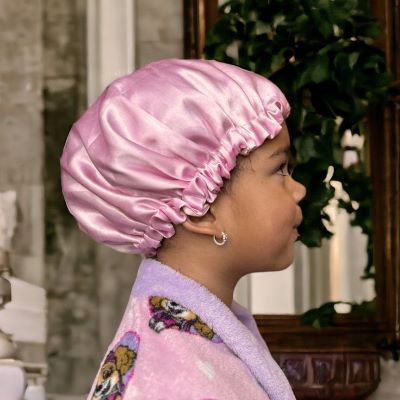
Photocredithttps://pin.it/2QiRMAOcl
Protective hairstyles work best when combined with good habits.
- Moisturize regularly
- Avoid tight styling
- Protect hair at night with satin
- Keep scalp clean
- Remove styles at the right time
- Detangle gently after removal
COMMON MISUNDERSTANDINGS
Many parents believe:
Tight braids last longer
→ In reality, they increase breakage risk
Protective styles eliminate all hair care needs
→ Hair still needs moisture and scalp care
Hair growth can be forced
→ Growth is biological, not mechanical
HOW TO CHOOSE THE RIGHT PROTECTIVE HAIRSTYLE (DECISION GUIDE)
Many parents struggle not because they lack hairstyle options, but because they are unsure how to choose the right one for their child.
This section simplifies that decision.
If your child is a toddler (1–3 years)
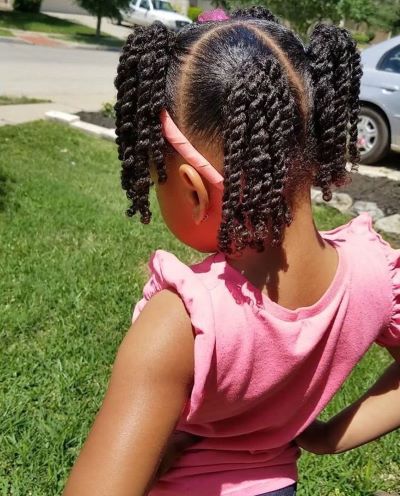
Photocredithttps://pin.it/1DYegJvSv
Choose:
- Two-strand twists
- Simple cornrows
- Soft puffs
- Flat twists
Why:
Their scalp is sensitive, and they cannot tolerate long styling sessions or tight tension.
If your child is preschool age (4–5 years)
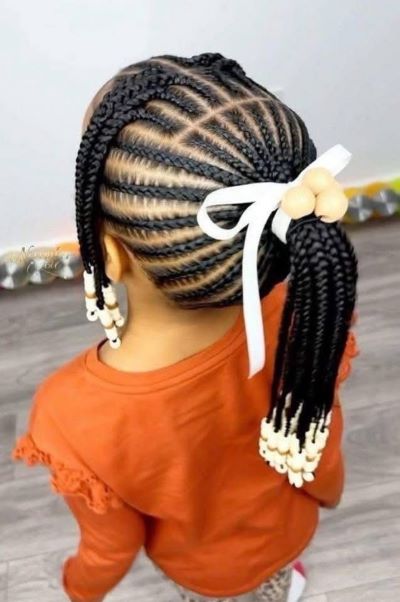
Photocredithttps://pin.it/5BG6CmfSr
Choose:
- Cornrows
- Flat twists
- Light braided ponytails
- Medium twists
Why:
They can sit longer, but comfort is still the priority over longevity.
If your child is school age (6–12 years)
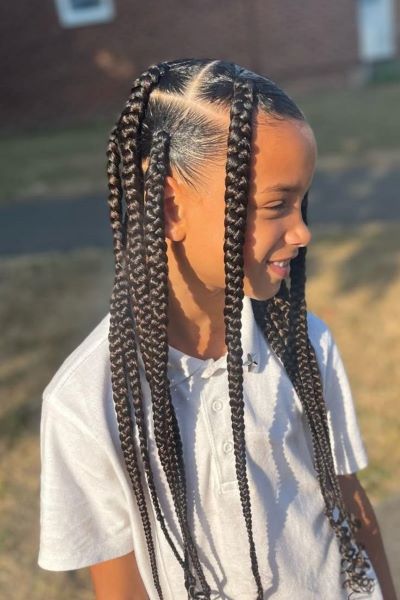
Photocredithttps://pin.it/4vzuJeZOa
Choose:
- Box braids (lightweight)
- Stitch braids
- Cornrows with designs
- Twists
Why:
They need styles that can withstand school, sports, and daily activity.
If your child is very active
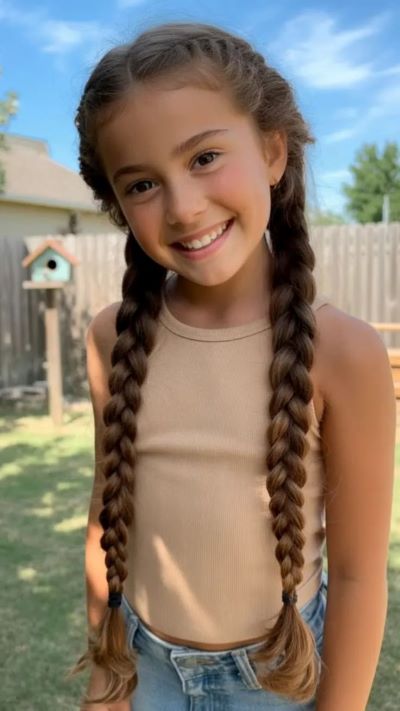
Photocredithttps://pin.it/1qD2j3rGI
Choose:
- Cornrows
- Braided buns
- Flat twists
Avoid:
- Heavy beads
- Very long braids
- Loose styles that tangle easily
If your child has a sensitive scalp
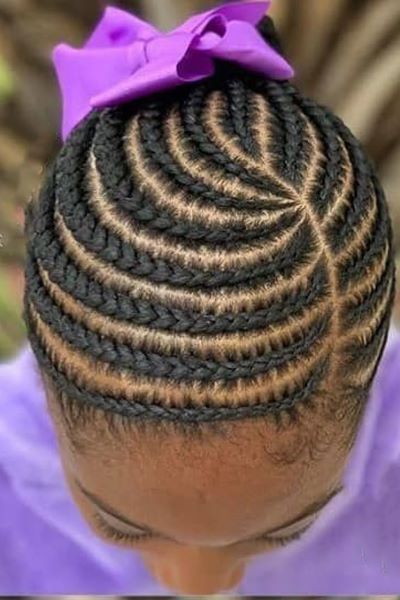
Photocredithttps://pin.it/4tTrnmjBF
Choose:
- Two-strand twists
- Flat twists
- Loose cornrows
Avoid:
- Tight braiding patterns
- Heavy extensions
- Styles pulled too close to the hairline
PARENT CHECKLIST (BEFORE INSTALLING ANY STYLE)
Before choosing a protective hairstyle, check:
Is my child comfortable sitting for this style?
Does this style match their activity level?
Is their scalp currently healthy?
Will this style be too heavy for their age?
Can I maintain this style properly at home?
Have I told the stylist not to braid too tightly?
COMMON MISTAKES PARENTS MAKE
These mistakes often cancel out the benefits of protective styling:
1. Choosing style based only on appearance
A style can look beautiful but still be unsuitable for a child’s scalp or routine.
2. Prioritizing longevity over comfort
A style that lasts 6 weeks but causes pain is not protective.
3. Ignoring early signs of tension
Redness, bumps, or complaints of pain should never be dismissed.
4. Not moisturizing during protective styling
Hair still needs hydration even when styled.
5. Leaving styles too long
Once new growth becomes tangled at the roots, breakage risk increases significantly.
KIDDIES HAIR HUB PARENT CORNER
Protective styling works best when it is gentle from the start.
Many parents focus on how long a style will last, but the real question should be: “Is my child’s hair still healthy in this style?”
If a hairstyle starts causing discomfort, it is always better to remove it early than to risk long-term stress on the scalp or hairline.
Healthy hair retention is built on comfort, consistency, and care—not endurance.
WHY CONSISTENCY MATTERS MORE THAN THE “PERFECT STYLE”
There is no single perfect protective hairstyle for children.
What matters more is:
- Regular moisture
- Gentle handling
- Appropriate styling for age
- Proper removal timing
- Healthy scalp maintenance
A simple, well-maintained style is far more beneficial than an elaborate one that is poorly cared for.
MINI HAIR CARE ROUTINE DURING PROTECTIVE STYLING
To maintain healthy hair while styled:
2–3 times weekly:
- Light moisturizing spray
- Scalp inspection
- Re-seal dry ends if exposed
Night routine:
- Satin bonnet or pillowcase
- Loose positioning (avoid tension while sleeping)
Weekly check:
- Check hairline
- Check for buildup
- Check comfort level
FREQUENTLY ASKED QUESTIONS
1. Do protective hairstyles make children’s hair grow faster?
No. Hair growth happens naturally at the scalp.
Protective hairstyles help reduce breakage so children can retain more of the length their hair already grows.
2. How often should I redo my child’s protective hairstyle?
It depends on the style, but most children’s styles should be refreshed or redone every 1–4 weeks depending on hair type, scalp condition, and activity level.
3. What is the gentlest protective hairstyle for kids?
Two-strand twists and flat twists are generally the gentlest because they place less tension on the scalp compared to tighter braided styles.
4. Can protective hairstyles damage my child’s hair?
Yes, if they are too tight, too heavy, or left in too long.
The protective benefit only applies when the style is installed and maintained correctly.
5. Should I moisturize my child’s hair while it is in braids?
Yes. Moisturizing is still necessary.
Light hydration helps prevent dryness and breakage even when hair is in a protective style.
KEY TAKEAWAYS
- Protective hairstyles help with length retention, not faster growth
- Breakage is the main reason children lose visible hair length
- Comfort and scalp health matter more than how long a style lasts
- Moisture and maintenance are still required during protective styling
- The best hairstyle is the one that fits the child’s age, hair type, and lifestyle
CONCLUSION
Protective hairstyles are one of the most effective tools for helping children maintain healthier-looking hair, but only when used correctly.
The real benefit is not in how long the hairstyle lasts, but in how well it protects the hair from everyday stress such as tangling, dryness, and excessive manipulation.
When parents focus on comfort, proper maintenance, and age-appropriate styling, protective hairstyles become a valuable part of a healthy hair care routine, not just a styling choice.
This article has shown you protective hairstyles for hair growth you can try out.
At Kiddies Hair Hub, the goal is to help parents make informed decisions that prioritize both hair health and the child’s comfort.
Leave a Reply