How to identify your child’s hair type
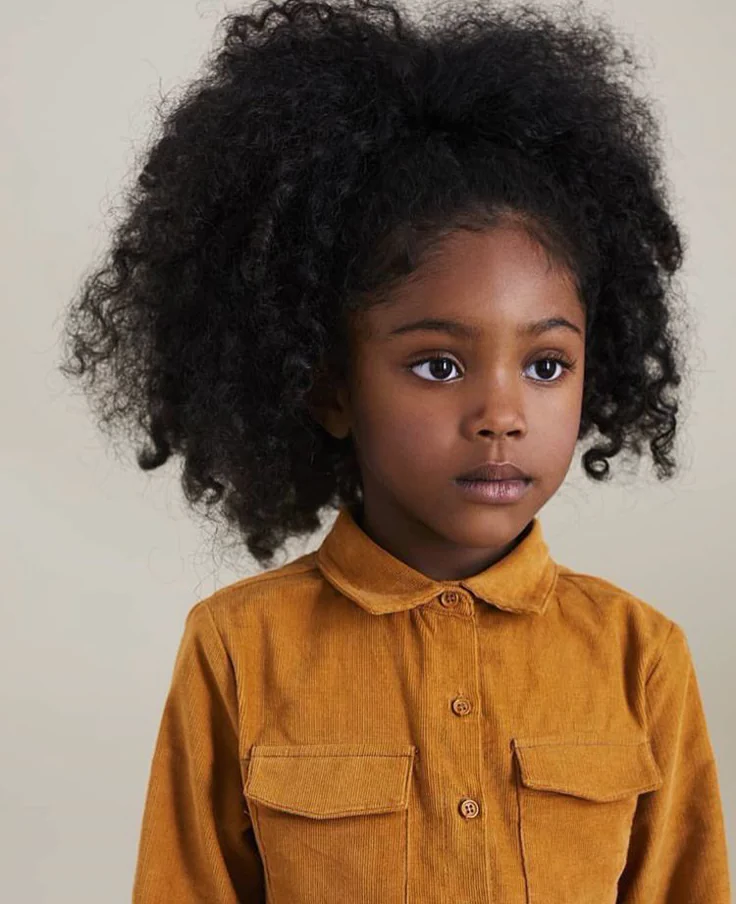
Understanding Your Child’s Hair Type and Why It Matters
Understanding your child’s hair type helps you make better hair care decisions.
Hair type includes curl pattern, strand thickness, hair density, and how the hair responds to moisture.
Knowing these characteristics can help parents choose suitable routines, hairstyles, and products that support healthy natural hair. https://kiddieshairhub.com/wp-admin/post.php?post=212&action=edit
TABLE OF CONTENTS
- What Does Hair Type Really Mean?
- Why Knowing Your Child’s Hair Type Matters
- Understanding Curl Patterns
- Hair Type Is More Than Curls
- Hair Density Explained
- Hair Strand Thickness Explained
- Hair Porosity Explained
- How to Identify Your Child’s Hair Type
- Frequently Asked Questions
- Conclusion
INTRODUCTION
Have you ever watched a hair tutorial online and wondered why the results looked completely different from your child’s hair?
Perhaps the hairstyle looked perfect on another child, but on your child it became frizzy much sooner.
Or maybe someone recommended a product that worked wonderfully for their family, yet it did not produce the same results for yours.
These situations often leave parents asking,
“Am I doing something wrong?”
In most cases, the answer is no.
Every child’s hair is unique.
Two children can both have beautiful natural hair and still need different routines because their hair has different characteristics.
Understanding your child’s hair type is not about placing their hair into a label.
It is about learning how their hair naturally behaves so you can care for it with confidence.
Once you understand your child’s hair, everyday tasks like wash day, moisturizing, detangling, and choosing protective hairstyles become much easier.
Instead of relying on trial and error, you begin making decisions based on what your child’s hair actually needs.
In this guide, we’ll explain hair type in simple language and help you understand the characteristics that make your child’s hair beautifully unique.
WHAT DOES “HAIR TYPE” REALLY MEAN?
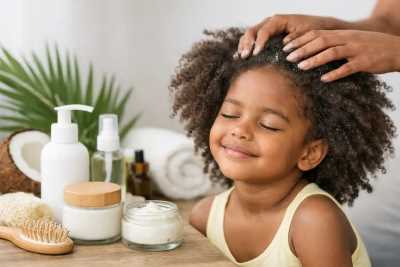
Many people think hair type refers only to curl pattern.
While curl pattern is important, it is only one part of the picture.
Your child’s hair type is made up of several characteristics working together.
These include:
- The shape of the curls or coils.
- How much hair your child has (hair density).
- How thick or fine each strand is.
- How easily the hair absorbs and holds moisture (porosity).
Looking at all of these characteristics together gives you a much clearer understanding of your child’s hair than curl pattern alone.
WHY KNOWING YOUR CHILD’S HAIR TYPE MATTERS
Learning about your child’s hair type can help answer many everyday questions.
For example:
Why does one hairstyle last all week while another only lasts two days?
Why does your child’s hair seem dry soon after moisturizing?
Why does one section tangle more than another?
Why does one product work well for another family but not yours?
The answers often become clearer when you understand your child’s individual hair characteristics.
Knowing your child’s hair type can help you:
- Build a more suitable hair care routine.
- Choose hairstyles that work well for their hair.
- Reduce unnecessary breakage.
- Improve moisture retention.
- Make wash day less frustrating.
- Spend less money trying products that may not suit your child’s hair.
Rather than copying every trend you see online, you can make informed decisions based on your own child’s needs.
UNDERSTANDING CURL PATTERNS

Curl pattern describes the natural shape of the hair.
Some hair grows with loose waves, while other hair forms defined curls or tight coils.
Among Black children, many natural hair textures fall within the curly and coily range, although every child is unique.
One important thing to remember is that curl pattern does not determine whether hair is healthy.
A child with tightly coiled hair can have very healthy hair.
A child with looser curls can also have healthy hair.
Healthy hair depends on consistent care, not on the shape of the curl.
WHY TWO CHILDREN WITH SIMILAR CURLS MAY NEED DIFFERENT ROUTINES
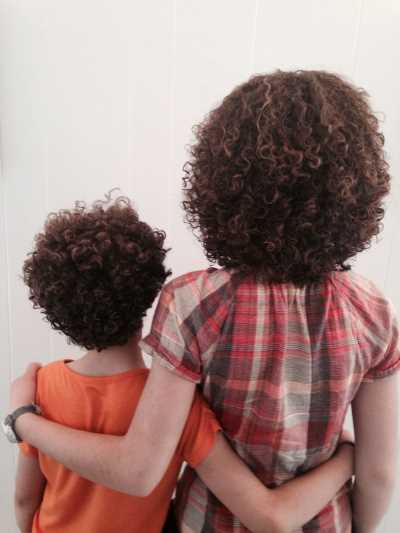
Imagine two sisters with curls that look almost identical.
At first glance, you might assume they need exactly the same products and hairstyles.
However, one child’s hair may absorb moisture quickly and dry out just as fast.
The other child’s hair may take longer to absorb moisture but stay hydrated for several days.
One child may have thick strands that tolerate frequent styling.
The other may have finer strands that need gentler handling.
Although their curls appear similar, their routines may be quite different.
This is why looking beyond curl pattern is so important.
KIDDIES HAIR HUB PARENT CORNER
It is easy to become focused on finding out whether your child has 3C or 4B hair.
While these labels can be helpful, they should never become your main goal.
The most important question is not,
“What curl type does my child have?”
Instead, ask,
“What is my child’s hair telling me?”
Is it staying moisturized?
Does it tangle easily?
Is it comfortable in certain hairstyles?
Is it becoming healthier over time?
Learning to observe your child’s hair will teach you far more than memorizing curl charts.
QUICK WIN
The next time you wash your child’s hair, let it air dry naturally without stretching or braiding it immediately.
Observe how the curls or coils naturally form.
This simple observation can help you better understand your child’s natural curl pattern.
HAIR CARE MYTH OF THE WEEK
Myth
Children with tighter curls cannot grow long, healthy hair.
Fact
Curl pattern does not determine how long hair can grow.
With gentle handling, consistent moisture, and healthy hair care habits, children with every curl pattern can maintain strong, healthy natural hair.
ASK A PARENT
“My child’s hair seems to have different curl patterns in different areas. Is that normal?”
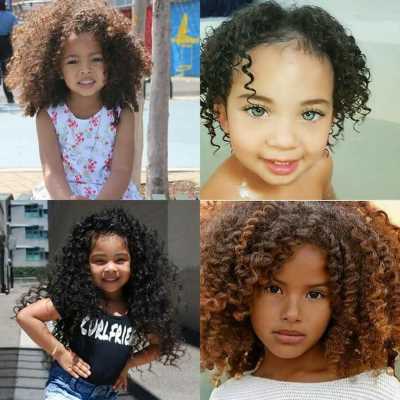
Yes.
Many children naturally have more than one curl pattern.
For example, the hair near the front may appear looser, while the hair at the crown or back may form tighter coils.
This is completely normal and simply means different sections of the hair may respond differently to styling and moisture.
AGE SPOTLIGHT
Toddlers (2–4 Years)
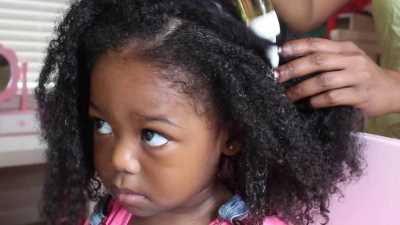
Hair texture may still appear to change as your child grows.
Avoid trying to classify it too early.
Focus instead on gentle routines and healthy habits.
Preschoolers (4–6 Years)
At this age, curl patterns often become easier to recognize.
Continue observing how the hair responds to washing, moisturizing, and styling.
School-Age Children (7–12 Years)
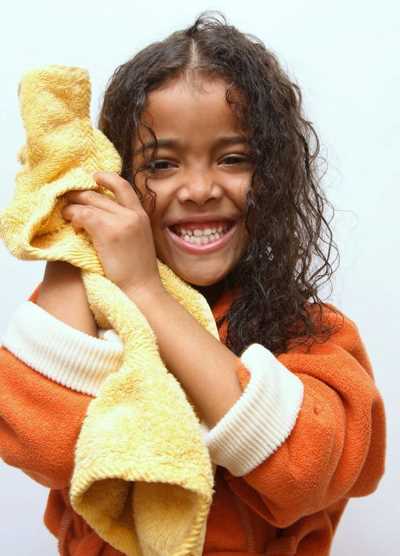
Older children can begin learning about their own hair.
Teaching them that every hair type is unique helps build confidence and encourages healthy hair care habits.
Hair Density: How Much Hair Does Your Child Have?
When parents are learning how to identify their child’s hair type, they often focus only on curls. However, another important characteristic is hair density.
Hair density refers to the number of hair strands growing on your child’s scalp. It does not describe how thick each strand is, but rather how much hair your child has overall.
Generally, hair density falls into three categories:
Low Density
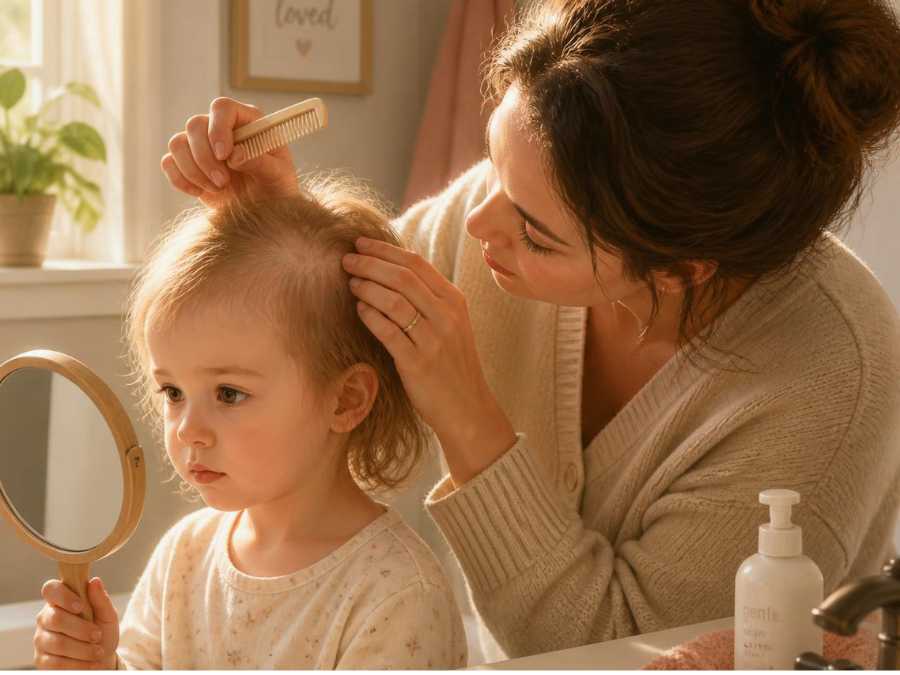
Children with low-density hair have fewer strands growing on the scalp. Their hair may look fuller when styled, but the scalp can become more visible when the hair is parted.
This does not mean the hair is unhealthy. It simply means hairstyles should avoid unnecessary tension and focus on creating volume without placing stress on the strands.
Medium Density
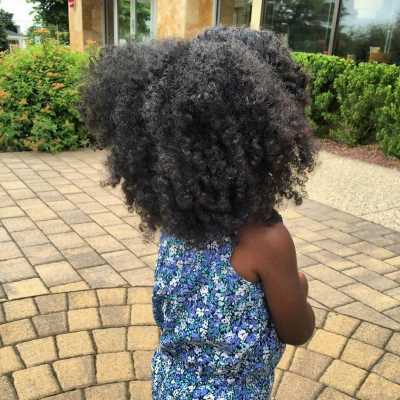
Medium-density hair is the most balanced. It is usually neither very full nor very sparse, making it easier to manage with a wide variety of hairstyles.
Many parents find that this hair type adapts well to different styling techniques while still benefiting from a consistent hair care routine.
High Density
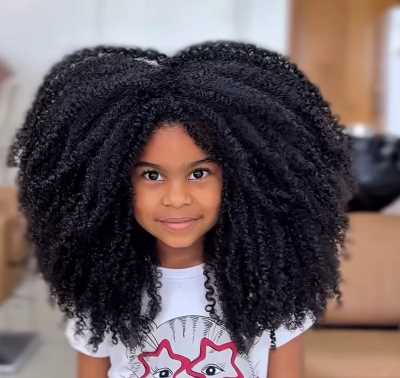
High-density hair contains a larger number of strands, giving it a fuller appearance.
Although many parents love the volume, high-density hair often requires extra time for washing, moisturizing, and detangling because every section needs proper attention.
Understanding density helps parents choose realistic styling routines instead of comparing their child’s hair to someone else’s.
Hair Strand Thickness: Fine, Medium, or Coarse?
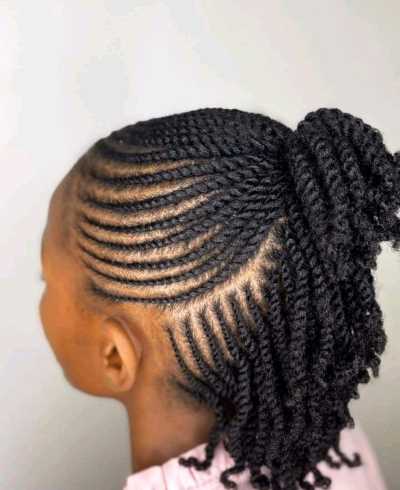
Another important part of how to identify your child’s hair type is understanding the thickness of each individual strand.
Hair strands can generally be described as:
Fine Hair
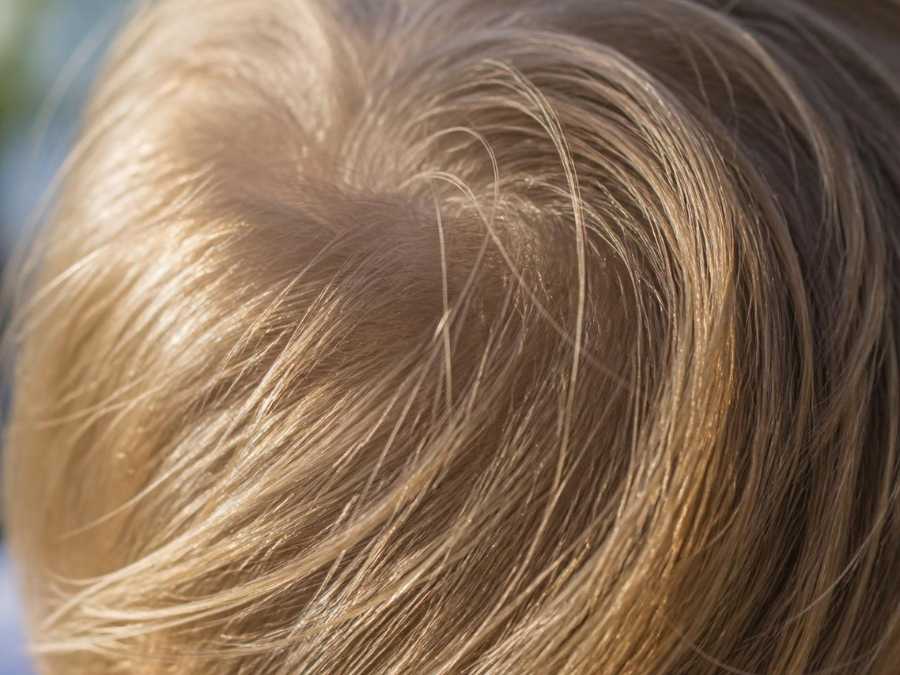
Fine strands are smaller in diameter and may feel soft and delicate.
Although fine hair can appear full when there are many strands, each strand is more vulnerable to damage from rough handling or excessive tension.
Children with fine strands often benefit from gentle detangling and comfortable hairstyles.
Medium Hair
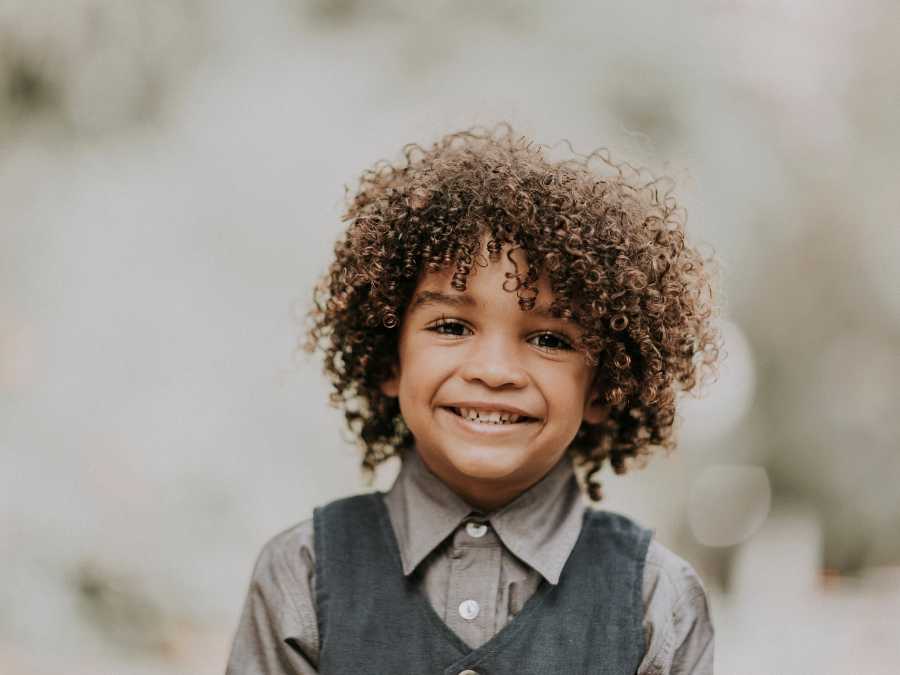
Medium strands are neither very fine nor very thick.
This strand thickness is often quite resilient while remaining flexible enough for different hairstyles.
Coarse Hair
Coarse strands have a larger diameter and may feel stronger to the touch.
Although coarse hair can tolerate some handling, it still needs regular moisture and gentle care.
No strand thickness is better than another.
Each simply responds differently to everyday hair care.
Hair Porosity: The Missing Piece Many Parents Overlook
When parents ask how to identify their child’s hair type, hair porosity is often overlooked.
Yet it plays one of the biggest roles in moisture retention.
Hair porosity describes how easily the hair absorbs and holds moisture.
This characteristic explains why two children with similar curl patterns can have completely different experiences using the same products.
Low Porosity
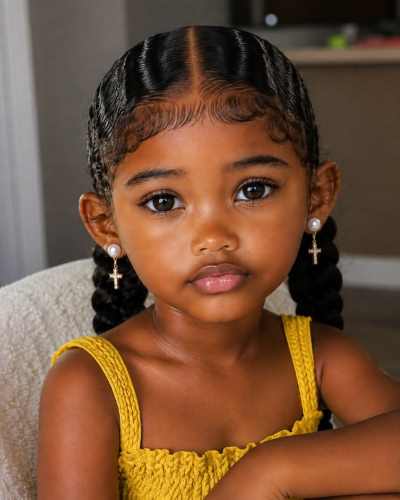
Photocredit
Low-porosity hair has a tightly closed outer layer.
Moisture can take longer to enter the hair, but once absorbed, it often remains for a longer period.
Parents sometimes think products are not working because they seem to sit on the surface before gradually absorbing.
Medium Porosity
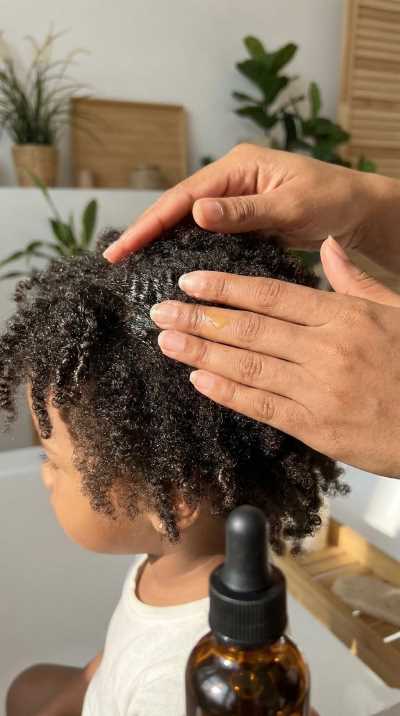
Medium-porosity hair usually absorbs and retains moisture relatively well.
Many families find this hair responds consistently to a simple routine without requiring frequent adjustments.
High Porosity
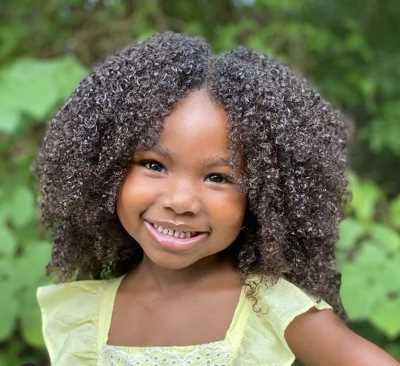
High-porosity hair absorbs moisture quickly but may also lose it faster.
As a result, parents may notice that the hair feels dry sooner after moisturizing.
This does not mean the routine is failing. It simply means the hair may benefit from moisture-retaining habits that help slow moisture loss.
How to Identify Your Child’s Hair Type at Home
Many parents assume they need professional tools to determine their child’s hair type.
Fortunately, learning how to identify your child’s hair type can begin with simple observation.
Start with freshly washed hair that is free from heavy styling products.
Allow the hair to dry naturally without stretching, braiding, or twisting it immediately.
Then observe:
- How the curls or coils naturally form.
- Whether the hair appears very full or less dense.
- Whether individual strands feel fine, medium, or coarse.
- How quickly the hair seems to absorb moisture.
- How long the hair stays moisturized after your regular routine.
There is no need to rush this process.
The more time you spend observing your child’s hair over several weeks, the better you will understand its unique needs.
Why Hair Type Can Change as Children Grow
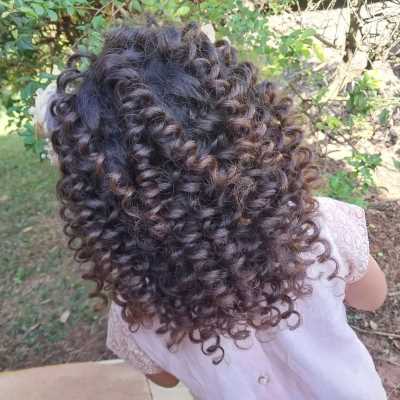
Another important fact parents should know is that children’s hair can change over time.
As children grow, you may notice changes in:
- Curl definition.
- Hair thickness.
- Density.
- Moisture needs.
- Overall manageability.
These gradual changes are a normal part of development.
Rather than trying to assign one permanent label, continue observing your child’s hair and adjust the routine as needed.
Common Mistakes Parents Make When Identifying Hair Type
Learning how to identify your child’s hair type takes patience, and there are a few common mistakes to avoid.
One mistake is relying only on online curl charts.
These charts can be helpful, but they cannot tell you everything about your child’s hair.
Another mistake is assuming that siblings will have identical hair.
Even children in the same family often have different combinations of curl pattern, density, strand thickness, and porosity.
Finally, avoid comparing your child’s hair with social media photos.
Lighting, styling techniques, and editing can create unrealistic expectations.
Your child’s healthiest hair will come from understanding their individual needs rather than trying to match someone else’s results.
Kiddies Hair Hub Parent Corner
One of the greatest gifts you can give your child is helping them appreciate their natural hair for what it is.
When parents understand how to identify their child’s hair type, they become more confident in choosing routines that suit their child instead of following every trend online.
Every curl, coil, and strand tells a story.
Learning to listen to your child’s hair is far more valuable than chasing perfection.
Quick Win
This week, choose one wash day to simply observe your child’s hair instead of trying a new product.
Take note of:
- How quickly the hair absorbs moisture.
- Which sections tangle the most.
- Which hairstyles seem to last longer.
- How the hair feels after two or three days.
These observations will teach you more about your child’s hair than any product advertisement ever could.
Signs You’ve Successfully Identified Your Child’s Hair Type
One of the biggest questions parents have after learning how to identify your child’s hair type is whether they have identified it correctly.
The good news is that there is no test you need to pass.
Instead, you’ll begin noticing that caring for your child’s hair becomes easier because your routine is based on observation rather than guesswork.
Some positive signs include:
- Moisture lasts longer between wash days.
- Detangling becomes easier.
- Hairstyles remain neat for longer.
- Your child experiences less breakage.
- You feel more confident choosing products and hairstyles.
- Your child becomes more comfortable during hair care.
If these improvements are happening, you are learning what your child’s hair truly needs.
Why Understanding Your Child’s Hair Type Matters More Than Following Trends
Social media is filled with hair routines that promise amazing results.
While many creators share helpful ideas, it is important to remember that their child’s hair may be very different from yours.
Learning how to identify your child’s hair type allows you to make decisions based on your child’s needs instead of copying routines that may not be suitable.
This approach also saves money.
Rather than purchasing every popular product or trying every trending hairstyle, you can focus on routines that consistently work for your family.
Over time, this builds confidence and makes hair care much less stressful.
Hair Goals Should Be Personal
Many parents compare their child’s hair with friends, classmates, or children they see online.
Try to avoid this.
Healthy hair looks different from one child to another.
Some children naturally have thicker hair.
Others have finer strands.
Some have tighter coils, while others have looser curls.
None of these characteristics make one hair type better than another.
Once you understand how to identify your child’s hair type, your goal shifts from comparison to care.
That is where healthy hair begins.
Frequently Asked Questions
Can my child have more than one hair type?
Yes.
Many children have different curl patterns in different parts of their hair.
For example, the front may have looser curls while the crown or nape has tighter coils.
This is completely normal and simply means some sections may need slightly different care.
At what age can I identify my child’s hair type?
Hair continues developing during the early years.
Although you can begin observing your child’s natural curl pattern when they are young, it may become easier to accurately identify your child’s hair type as they grow.
The most important thing is to observe rather than rush to assign a label.
Does hair type determine how fast hair grows?
No.
Hair type does not control the rate of hair growth.
Instead, it influences how the hair behaves, how easily it tangles, and how well it retains moisture.
Healthy routines help children retain length regardless of curl pattern.
Should siblings have the same hair routine?
Not necessarily.
Even siblings can have different curl patterns, densities, strand thicknesses, and moisture needs.
Each child’s routine should be based on their own hair rather than family similarities.
Will my child’s hair type change?
It can.
As children grow, you may notice gradual changes in curl definition, thickness, density, or overall texture.
Continue observing your child’s hair and adjust the routine when needed.
Hair Care Myth vs. Fact
| Myth | Fact |
| Every child with 4C hair needs exactly the same routine. | Hair care depends on curl pattern, density, porosity, strand thickness, and individual needs. |
| Hair type determines whether hair is healthy. | Healthy hair comes from consistent care, not from a particular curl pattern. |
| One product works for every child. | Children’s hair responds differently based on its unique characteristics. |
| Hair type never changes. | Children’s hair can gradually change as they grow. |
| Curl charts tell you everything you need to know. | Curl charts are helpful, but observing your child’s hair provides much more useful information. |
Kiddies Hair Hub Parent Corner
One of the most valuable things you can learn is how to identify your child’s hair type with patience instead of pressure.
You do not need to memorize every curl category or become an expert overnight.
Simply paying attention to how your child’s hair responds to washing, moisturizing, styling, and everyday life will teach you far more than any chart ever could.
Remember that your child is also watching how you respond to their hair.
When you speak positively about their curls and coils, approach hair care with patience, and celebrate progress instead of perfection, you help build confidence that can last a lifetime.
Healthy hair begins with healthy attitudes.
Quick Takeaways
- Hair type includes more than curl pattern.
- Hair density, strand thickness, and porosity all influence your child’s hair care routine.
- Learning how to identify your child’s hair type helps you choose better hairstyles, products, and routines.
- Every child’s hair is unique, even among siblings.
- Healthy hair comes from consistency rather than copying trends.
- Understanding your child’s hair makes everyday hair care easier and more enjoyable.
Conclusion
Learning how to identify your child’s hair type is one of the most valuable steps you can take as a parent.
When you understand your child’s natural curl pattern, hair density, strand thickness, and porosity, you can make decisions based on what their hair truly needs instead of relying on trial and error.
Remember that there is no perfect hair type.
Every child deserves to feel confident in their natural hair, whether they have loose curls, springy ringlets, or tightly coiled strands.
By observing your child’s hair, responding to its unique characteristics, and building a consistent routine, you are laying the foundation for healthier hair and greater confidence.
At Kiddies Hair Hub, we believe that understanding your child’s hair is the first step toward caring for it well.
The more you learn about your child’s hair today, the easier every wash day, moisturizing session, and hairstyle will become tomorrow.
Cute braids hacks for kids natural hair
Understanding Your Child’s Hair Type and Why It Matters
Why Does My Child’s Hair Break Around the Hairline?
How to Prevent Split Ends in Children’s Natural Hair
How to Wash Braids and Protective Styles Without Ruining Them
How to Choose the Right Protective Hairstyle for Your Child’s Hair
How to Grow Healthy Natural Hair for Kids Without Chasing Every New Product
Why Is My Child’s Natural Hair So Dry? Causes and Solutions Parents Need to Know
How to Make Wash Day Easier for Kids: A Calm, Simple Routine Parents Can Actually Follow
How to Build Your Child’s Confidence Through Positive Hair Care
Leave a Reply