Why Does My Child’s Hair Break Around the Hairline?
Your child’s hair may break around the hairline because the area is exposed to frequent tension, brushing, styling, friction, and manipulation.
Tight hairstyles, repeated pulling, rough detangling, and unsuitable hair accessories can all contribute to breakage.
Gentle styling and reducing repeated tension can help protect the hairline. https://kiddieshairhub.com/wp-admin/post.php?post=212&action=edit
Why does my child’s hair break around the hairline
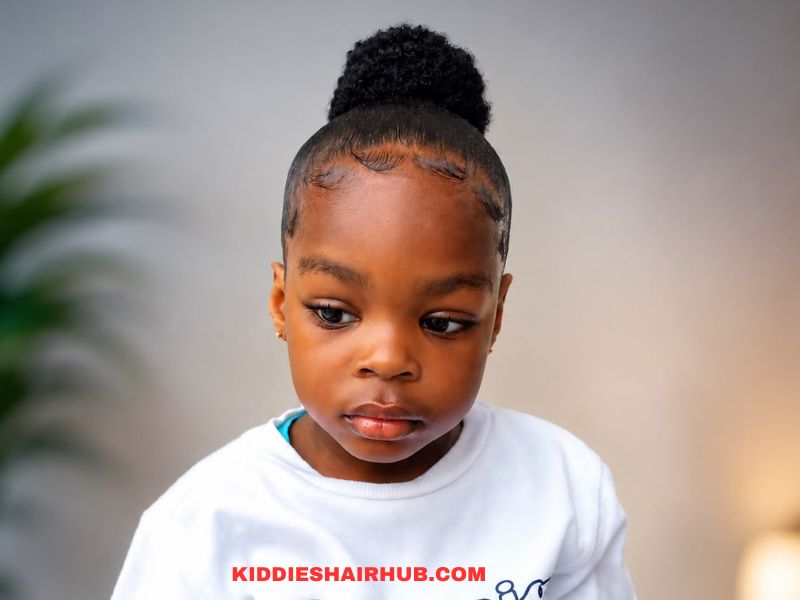
A child’s hairline can sometimes tell you a lot about how their hair is being handled
You may notice that the hair around your child’s forehead or temples looks shorter than the rest of the hair.
Perhaps the edges seem thinner, or you notice small broken strands whenever you style the hair.
It can be worrying, especially when you’re trying to take good care of your child’s natural hair.
The good news is that hairline breakage doesn’t necessarily mean that something is seriously wrong.
The hair around the hairline is naturally delicate and is exposed to a great deal of daily manipulation.
Brushing, ponytails, braids, headbands, hats, pillows, and even repeatedly styling the same area can place stress on these strands.
Understanding why your child’s hair breaks around the hairline is the first step toward changing the habits that may be contributing to the problem.
Why Is the Hairline So Delicate?
The hairline is one of the areas parents should treat particularly gently.
The strands around the forehead and temples can be finer and shorter than the hair farther back on the scalp.
Because they are often used to create neat-looking hairstyles, they may also receive more manipulation.
Think about a typical morning.
You may brush the front of the hair, smooth it into a ponytail, secure it with an elastic, add a headband, or create a braided style.
If similar tension is applied repeatedly, the same area may experience stress again and again.
That doesn’t mean parents should stop styling their children’s hair.
It means the hairline deserves a gentler approach.
Tight Hairstyles Can Put Stress on the Hairline
One of the most common things to examine when a child’s hairline is breaking is the amount of tension created by their hairstyles.
A hairstyle can look beautiful and neat while still being too tight.
This is particularly important with:
- Tight ponytails.
- Braids pulled firmly at the front.
- Cornrows installed with excessive tension.
- Tight buns.
- Styles that repeatedly pull the hair backward.
- Accessories that grip the hair too firmly.
A hairstyle should never need to hurt in order to look neat.
If your child complains that their hairstyle hurts, feels tight, or gives them a headache, take that seriously.
Pain is a sign that the style needs to be adjusted or removed.
Repeated Styling Can Cause Breakage
Even when individual hairstyles aren’t extremely tight, repeatedly styling the same area can contribute to wear.
For example, imagine your child wears a high ponytail several times a week.
The hair at the front is brushed backward, secured, and then released.
The next day, it happens again.
Over time, that repeated manipulation can place stress on the same strands.
Changing the direction and position of hairstyles can help reduce repeated stress on one particular area.
Instead of always creating the same ponytail, you can alternate with loose twists, puffs, or styles that don’t require pulling the front hair backward.
Brushing Can Affect the Hairline
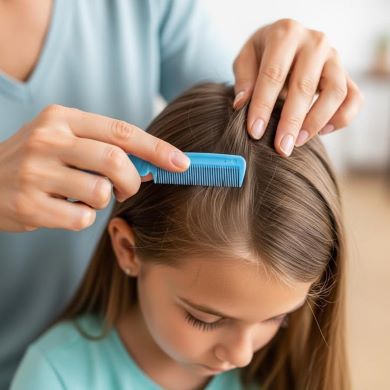
Parents naturally want their child’s hair to look neat.
However, repeatedly brushing the hairline to achieve a perfectly smooth appearance can sometimes create unnecessary stress.
This is particularly true when the hair is dry or tangled.
Rather than brushing aggressively, use a gentle approach and avoid repeatedly going over the same area.
You don’t need every strand around the forehead to be perfectly laid down.
Healthy hair is more important than achieving an extremely sleek finish.
Hair Accessories Matter Too
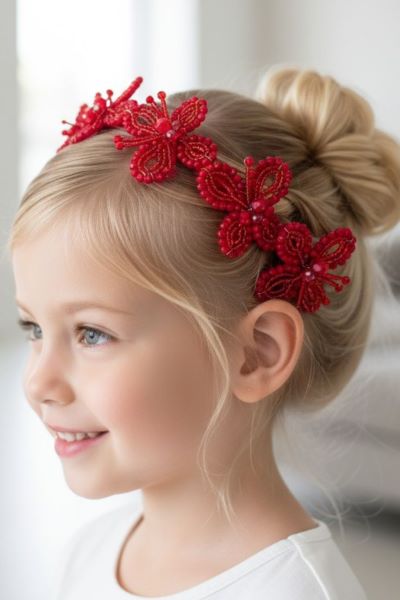
Sometimes the problem isn’t the hairstyle itself.
The accessory may be contributing to the breakage.
Some hair ties can grip tightly or catch on individual strands when removed.
Rough clips and accessories with sharp edges can also snag the hair.
When choosing accessories for children, look for options that are smooth, soft, and easy to remove.
And when taking an accessory out, don’t pull it quickly through the hair.
Gently loosen it first.
Those few extra seconds can make a difference over time.
Friction Can Affect the Hairline
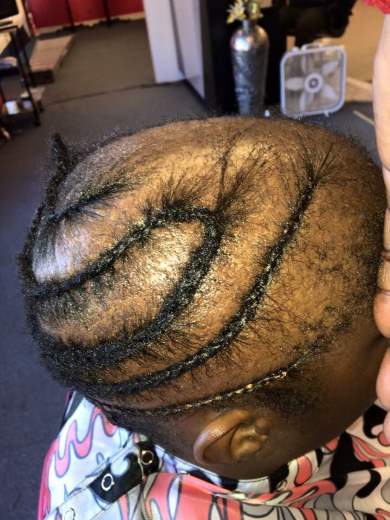
Friction is another factor parents may overlook.
Hair can rub against:
- Pillows.
- Hats.
- Headbands.
- Car-seat surfaces.
- Clothing.
- Hooded jackets.
Your child may also move around considerably while sleeping.
Reducing unnecessary friction, particularly at night, can help minimize mechanical stress on the hair.
A satin or similarly smooth pillowcase can be a practical option if your child doesn’t tolerate wearing a bonnet.
Kiddies Hair Hub Parent Corner(Why does my child’s hair break around the hairline
If you notice that your child’s hairline is becoming shorter or thinner, don’t immediately assume that you need a stronger hair product.
Start by looking at the routine.
Ask yourself:
Is the hair being pulled?
Is the same area being styled repeatedly?
Are we brushing the hairline too aggressively?
Could the accessories be catching the hair?
Does the hairstyle ever cause discomfort?
Sometimes the most effective change isn’t adding another product.
It is removing the source of repeated stress.
Quick Win
For the next two weeks, avoid hairstyles that pull your child’s hairline tightly backward.
Choose looser styles and handle the front of the hair as gently as possible.
Then observe whether the area becomes easier to manage and whether you notice less breakage during styling.
Be Careful When Detangling Around the Hairline
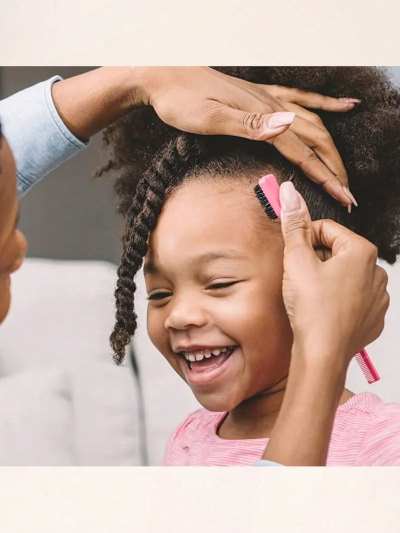
Detangling is one of the moments when children’s hair can experience significant manipulation.
The hairline deserves particular care because the strands can be shorter and more delicate.
When detangling your child’s hair, avoid starting with a comb at the roots and forcing it through knots.
Instead, work gently in manageable sections and begin with the ends.
If a knot doesn’t move easily, don’t pull harder.
Use your fingers to loosen it gradually and add an appropriate moisturizing or conditioning product if needed.
The goal is to remove tangles while minimizing unnecessary pulling.
Avoid Trying to Make the Edges Perfect
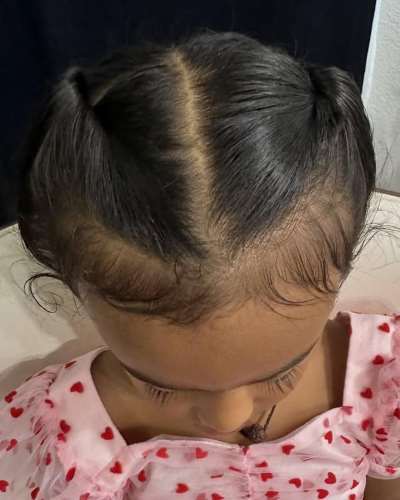
Photocredithttps://pin.it/1Q3vZYm3h
Social media has made extremely smooth and defined edges popular, but children’s hair doesn’t need to look perfectly laid down every day.
Repeatedly brushing, combing, or smoothing the hairline to create a sleek appearance can add unnecessary manipulation.
A few natural curls around the forehead are completely fine.
Your child’s hairstyle can still look beautiful without putting constant pressure on the hairline.
This is particularly important for younger children who may have finer or shorter hair around the edges.
Give the Hairline a Break

If you regularly style your child’s hair, consider alternating between hairstyles that use different sections of the hair.
For example, if you normally pull the hair backward, occasionally choose a style that leaves the front relatively free.
If your child usually wears a ponytail, switch to loose twists or another low-manipulation style.
Giving the same area a break can reduce repeated stress.
You don’t need to stop styling your child’s hair altogether.
You simply want to avoid putting the same type of tension on the same strands every day.
Protective Hairstyles Can Help, but They Must Be Gentle
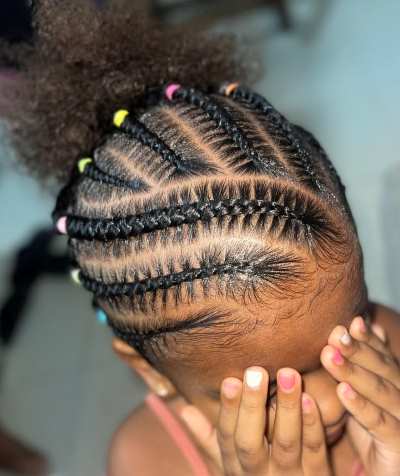
Protective hairstyles can reduce daily manipulation, but not every protective style is automatically gentle.
A hairstyle that keeps the ends tucked away while pulling tightly on the hairline isn’t providing much protection to the area that needs it most.
When choosing a protective style, look at how the hair is being secured.
A good style should feel comfortable from the moment it is installed.
If your child says:
- “It hurts.”
- “It’s too tight.”
- “My head hurts.”
- “My hair is pulling.”
Don’t ignore those complaints.
The hairstyle should be loosened or removed.
Don’t Use Hair Growth Claims as a Substitute for Gentle Care
When parents notice hairline breakage, it can be tempting to search for products promising rapid hair growth.
However, products cannot replace good hair-care practices.
If the hairline is repeatedly exposed to tension or rough handling, adding more products won’t necessarily solve the underlying problem.
Start with the basics:
Reduce tension. Handle the hair gently. Limit repeated manipulation. Protect the hair from friction.
Then consider whether additional products are actually necessary.
Moisture and the Hairline
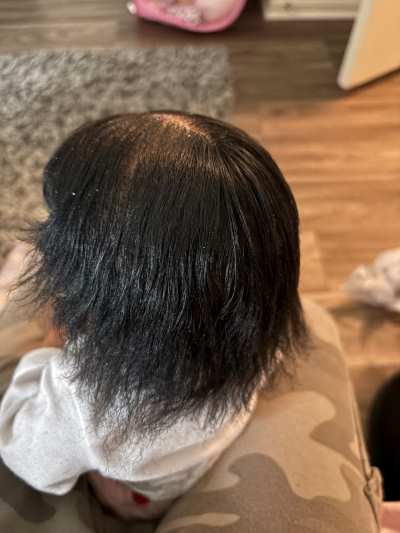
Dryness can make natural hair more difficult to manage.
When the hair feels dry and rough, brushing or styling may create more friction.
Keeping the hair adequately moisturized can make manipulation easier.
However, avoid applying large amounts of product directly to the hairline simply because you’re concerned about breakage.
More product isn’t always better.
A simple, consistent routine is generally easier to maintain.
Pay Attention to Hair Accessories
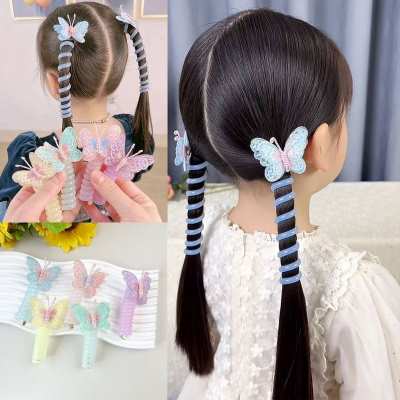
The accessories your child wears every day can have a bigger impact than you might expect.
Headbands, elastic bands, clips, and decorative accessories can all interact differently with natural hair.
If an accessory frequently catches strands when you remove it, consider replacing it.
Likewise, if a headband leaves a noticeable indentation or your child says it feels uncomfortable, choose a looser option.
The best accessory is one that stays secure without putting unnecessary pressure on the hair.
What About Hats and Head Coverings?
Hats can create friction around the forehead and edges, especially when worn frequently.
This doesn’t mean children shouldn’t wear hats.
Hats can be useful for warmth, sun protection, and outdoor activities.
The goal is simply to make sure the hat isn’t excessively tight and isn’t constantly rubbing against the same area.
If your child wears hats regularly, pay attention to how their hairline looks and feels afterward.
Hairline Care During School
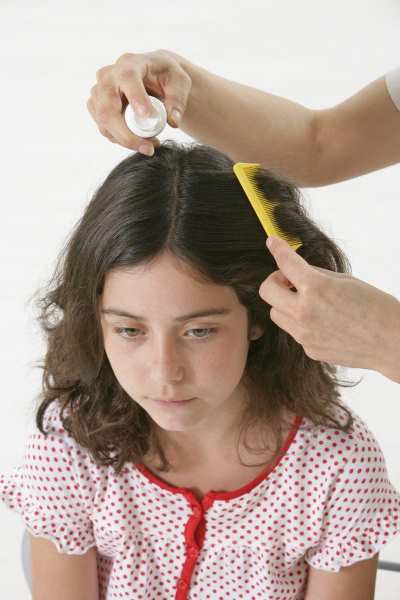
School routines can make hairline care a little more challenging.
Children may spend hours wearing the same hairstyle, playing outside, participating in sports, or wearing hats and helmets.
This is another reason to avoid overly tight hairstyles before school.
A comfortable hairstyle can help your child focus on school and activities instead of constantly adjusting or scratching their hair.
For active children, a simple low-manipulation style may be more practical than an elaborate hairstyle that requires frequent adjustment.
Kiddies Hair Hub Parent Corner (Why does my child’s hair break around the hairline)
It’s easy to feel pressure to make children’s hairstyles look perfect.
But children’s hair doesn’t need to be perfectly sleek to be beautiful.
A healthy hairline is more important than perfectly laid edges.
If you find yourself repeatedly brushing, smoothing, or pulling the front of your child’s hair to achieve a particular look, consider whether the style can be simplified.
Sometimes less styling is better styling.
Quick Win
Look at your child’s last three hairstyles.
Did they all pull the hair in the same direction?
If they did, choose a hairstyle next time that changes the direction or leaves the hairline more relaxed.
This simple adjustment can reduce repeated stress on the same strands.
A Simple Hairline-Friendly Routine
Protecting your child’s hairline doesn’t require a complicated routine.
The most important changes usually involve how the hair is handled, rather than how many products are used.
Start by being gentle during wash days.
When detangling, work in sections and avoid repeatedly combing through the hairline.
Give the conditioner or moisturizing product enough time to soften the hair before attempting to remove difficult tangles.
When styling, choose hairstyles that don’t require excessive pulling.
If you’re creating a ponytail, puff, braid, or twist style, check the front and sides before finishing.
If the hair looks stretched extremely tightly, loosen the style.
At bedtime, reduce friction with a satin or similarly smooth pillowcase if that works for your child.
And between hairstyles, allow the hairline to rest rather than constantly restyling it.
What to Do When You Notice Hairline Breakage

If you notice that your child’s hairline is breaking, don’t panic.
Start by examining the routine.
Think about what has changed recently.
Has your child been wearing tighter hairstyles?
Have you been styling the hair more frequently?
Are you brushing the edges every morning?
Have you introduced a new accessory?
Has your child been wearing a hat more often?
Answering these questions can help you identify possible sources of repeated stress.
Once you’ve identified a potential cause, make one or two changes rather than completely changing your child’s entire routine.
For example, if tight ponytails appear to be contributing to the problem, switch to looser styles for a while.
If brushing is causing excessive manipulation, reduce how often the hairline is brushed.
Small, consistent changes can be easier to maintain.
When Should You Stop a Hairstyle?
A hairstyle should be reconsidered if your child experiences discomfort.
Don’t wait until the style starts looking messy.
If your child complains that the hairstyle hurts, feels too tight, or pulls when they move, that’s enough reason to adjust it.
You should also pay attention to signs such as:
- Persistent scalp discomfort.
- Noticeable tension around the hairline.
- Broken hairs around repeatedly styled areas.
- Increased tangling around the edges.
- A hairstyle that becomes increasingly uncomfortable.
A neat hairstyle isn’t worth causing discomfort.
When Should You Speak With a Professional?
Hair breakage can have many causes.
If you’ve reduced tension and manipulation but the hairline continues to become noticeably thinner, or if you have concerns about your child’s scalp or hair growth, speak with a qualified healthcare professional or dermatologist.
This is especially important if you notice changes that don’t seem related to normal styling or hair handling.
A professional can assess your child’s scalp and hair and determine whether further evaluation is needed.
Parents don’t need to diagnose the cause themselves.
Can Children’s Hairline Grow Back After Breakage?
If hair has broken because of mechanical stress, reducing that stress may allow the affected area to improve as new hair grows.
However, hair growth takes time.
Avoid expecting an immediate change after modifying your child’s routine.
The most helpful approach is to consistently reduce unnecessary tension and manipulation while treating the area gently.
If the hairline continues to change despite these adjustments, professional evaluation is appropriate.
Frequently Asked Questions
Why does my child’s hair break around the hairline?
The hairline can break because of repeated tension, tight hairstyles, frequent brushing, rough detangling, friction, and unsuitable hair accessories.
The area may also naturally contain shorter or finer strands that need gentle handling.
How can I stop my child’s edges from breaking?
Reduce tight hairstyles and repeated brushing around the hairline.
Choose gentle accessories, handle the hair carefully during detangling, and alternate hairstyles so the same area isn’t constantly under tension.
Are ponytails bad for children’s hair?
Ponytails aren’t automatically bad for children’s hair.
The concern is how tightly the hair is pulled and how frequently the same area is styled.
A loose, comfortable ponytail can be very different from a tightly pulled ponytail worn repeatedly.
Can braids cause hairline breakage?
Yes, particularly if they are installed with excessive tension.
Braids should feel comfortable, and the hairline shouldn’t appear extremely stretched or pulled.
Should I brush my child’s edges every day?
Daily brushing isn’t necessary simply to make the hairline look perfectly smooth.
If brushing is causing repeated manipulation, consider leaving the natural texture visible or choosing a hairstyle that doesn’t require frequent smoothing.
Is it okay to use edge control on children’s hair?
Hair products should be chosen based on your child’s individual needs and used according to their intended purpose.
The bigger issue is how the hair is handled.
Using a styling product does not make a tight hairstyle safe.
How can I protect my child’s hairline at night?
Reducing friction can help.
A satin pillowcase is one option. Some children may also be comfortable wearing a satin bonnet or scarf designed for their age and routine.
How long does it take for a damaged hairline to recover?
There isn’t a fixed timeline.
Hair grows gradually, and improvement depends on the cause of the breakage and whether the source of repeated stress has been removed.
Kiddies Hair Hub Parent Corner
Your child’s hair doesn’t have to look perfectly sleek every day.
Children run, play, sleep, attend school, participate in activities, and generally move around a lot.
Their hairstyles need to work with their lives.
That means a few curls around the forehead aren’t a problem.
A little frizz isn’t a problem.
And a hairstyle that isn’t perfectly smooth doesn’t mean you’ve done anything wrong.
When caring for children’s natural hair, comfort and healthy handling should always come before perfection.
If you’re concerned about your child’s hairline, start with the simplest questions:
Is the hairstyle too tight?
Am I manipulating this area too often?
Could an accessory be pulling the hair?
Could friction be contributing to the problem?
Once you identify the likely source, make gentle changes and give the hair time.
Quick Takeaways
- The hairline can be particularly sensitive to repeated manipulation.
- Tight hairstyles can contribute to hairline breakage.
- Excessive brushing and smoothing can create unnecessary stress.
- Hair accessories should be smooth and comfortable.
- Changing hairstyles can prevent the same area from being repeatedly pulled.
- Protective styles should never be painfully tight.
- A satin or similarly smooth pillowcase can help reduce nighttime friction.
- Healthy hair is more important than perfectly laid edges.
- Persistent or unexplained hair changes should be discussed with a qualified healthcare professional.
Conclusion
Understanding why your child’s hair breaks around the hairline starts with looking at the everyday habits surrounding their hair.
Tight hairstyles, repeated brushing, rough detangling, friction, and certain accessories can all place stress on the delicate strands around the forehead and temples.
Fortunately, protecting the hairline doesn’t require an expensive collection of products or an elaborate routine.
Gentle handling, comfortable hairstyles, reduced manipulation, and attention to friction can make children’s hair care easier and more manageable.
Most importantly, remember that your child’s hair doesn’t need to look perfectly smooth to be healthy.
Give the hairline room to rest, choose comfortable hairstyles, and focus on consistency rather than perfection.
And if you notice persistent or unexplained changes in your child’s hair or scalp, don’t hesitate to seek professional advice.
4C hair growth routine that actually works
Baby girl hairstyles for 4c short hair
The Complete Guide to Hairstyles for 2-Year-Old Black Girls
Parent’s Guide to Hairstyles for Preteen Girls (Ages 11–12)
How to Choose the Right Protective Hairstyle for Your Child’s Hair Type
Why Protective Hairstyles Help Children Retain Healthier Hair
How Often Should You Wash Your Child’s Natural Hair? A Simple Guide for Parents
Best Protective Hairstyles for Toddlers: Gentle Styles That Keep Little Hair Healthy
Signs Your Child’s Hairstyle Is Too Tight and What to Do About It
How to Detangle Children’s Hair Without Tears: A Gentle Guide for Parents
How to Moisturize Children’s Natural Hair Without Making It Greasy
How Long Should Children Keep Protective Hairstyles? A Parent’s Guide to Healthy Timing
Leave a Reply