How to Prevent Split Ends in Children’s Natural Hair
The best way to help prevent split ends in children’s natural hair is to reduce unnecessary friction and manipulation, keep the hair adequately moisturized, detangle gently, avoid excessive heat, and handle the ends carefully.
Regular trimming may also help prevent existing splits from traveling farther up the hair shaft. https://kiddieshairhub.com/wp-admin/post.php?post=456&action=edit
How to Prevent Split Ends in Children’s Natural Hair
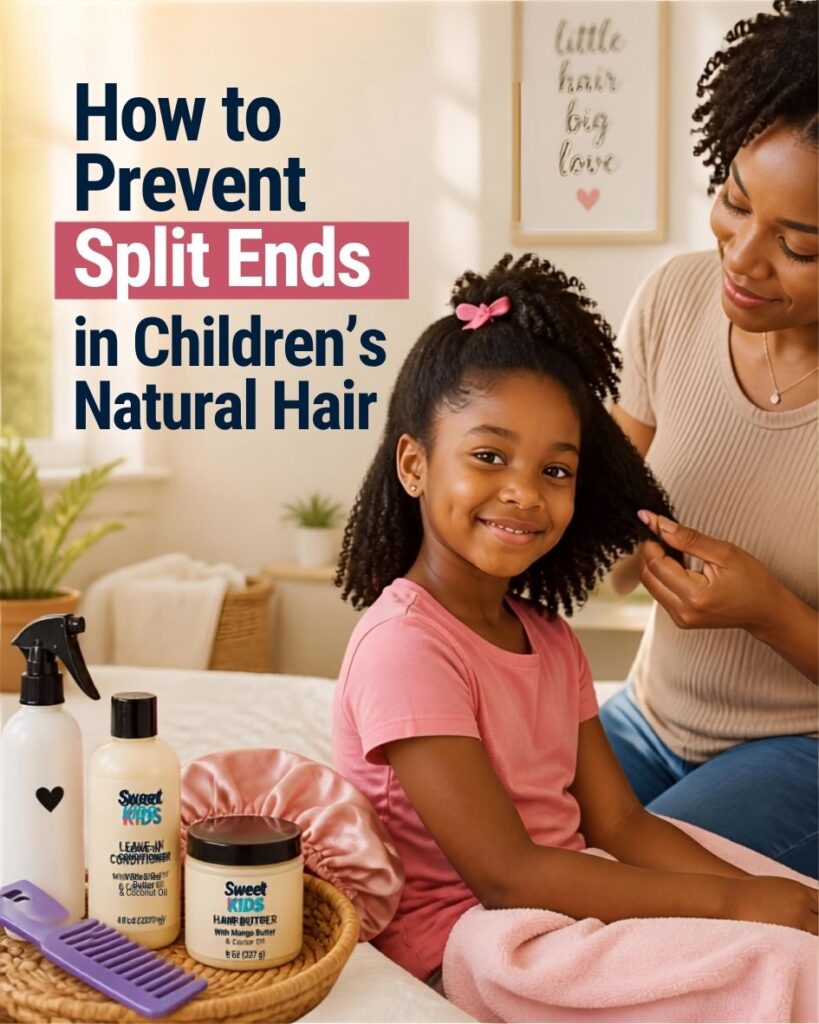
You may notice that your child’s hair seems to grow beautifully at the roots but doesn’t appear to be getting longer.
Sometimes the problem isn’t that the hair isn’t growing.
The issue may be length retention.
Children’s hair grows from the scalp, but the ends are the oldest and most fragile part of the hair.
As the hair becomes exposed to brushing, combing, clothing, pillows, styling, weather, and everyday activity, the ends can become dry and damaged.
Eventually, the hair may develop split ends.
This is particularly important for children with natural or tightly curled hair because frequent manipulation and dryness can make the ends more vulnerable to breakage.
Learning how to prevent split ends in children’s natural hair doesn’t require an expensive collection of products or an elaborate routine.
In most cases, it comes down to consistent, gentle habits.
From detangling and moisturizing to bedtime protection and choosing appropriate hairstyles, small changes can make a significant difference in how well your child’s hair retains length.
What Are Split Ends?
A split end occurs when the protective outer layer of a hair strand becomes damaged and the strand begins to separate toward the end.
You may notice that the ends of your child’s hair look:
- Frayed.
- Uneven.
- Dry.
- Rough.
- Thinner than the rest of the strand.
Split ends cannot be permanently repaired with a hair product.
Some products can temporarily make damaged hair appear smoother, but once a strand has split, trimming is the only way to physically remove the damaged portion.
That is why prevention and gentle hair care are so important.
Why Do Children Get Split Ends?
Children’s hair goes through a lot during a normal day.
Think about everything the hair comes into contact with.
There are pillows at night, clothing during the day, car seats, hats, backpacks, playground activities, swimming, sports, and frequent styling.
For natural hair, additional factors can include shrinkage, tangling, dryness, and frequent detangling.
Some common contributors to split ends include:
Frequent Manipulation
Every time hair is brushed, combed, pulled, or restyled, it experiences some degree of mechanical stress.
That doesn’t mean you should avoid caring for your child’s hair.
Instead, the goal is to handle it gently and avoid unnecessary manipulation.
Dryness
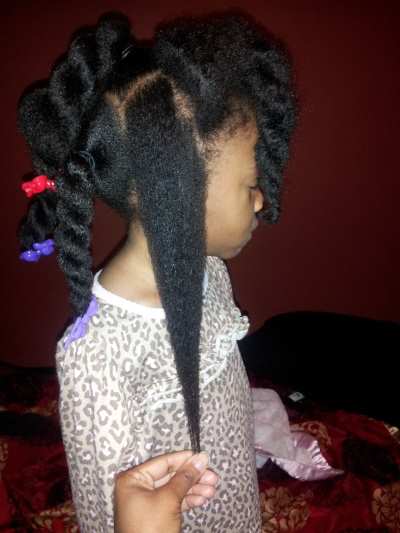
Dry hair is generally more vulnerable to mechanical stress.
When natural hair feels rough or becomes difficult to detangle, forcing a comb through it can contribute to breakage and damage.
Keeping the hair properly moisturized can make everyday handling easier.
Tight Hairstyles
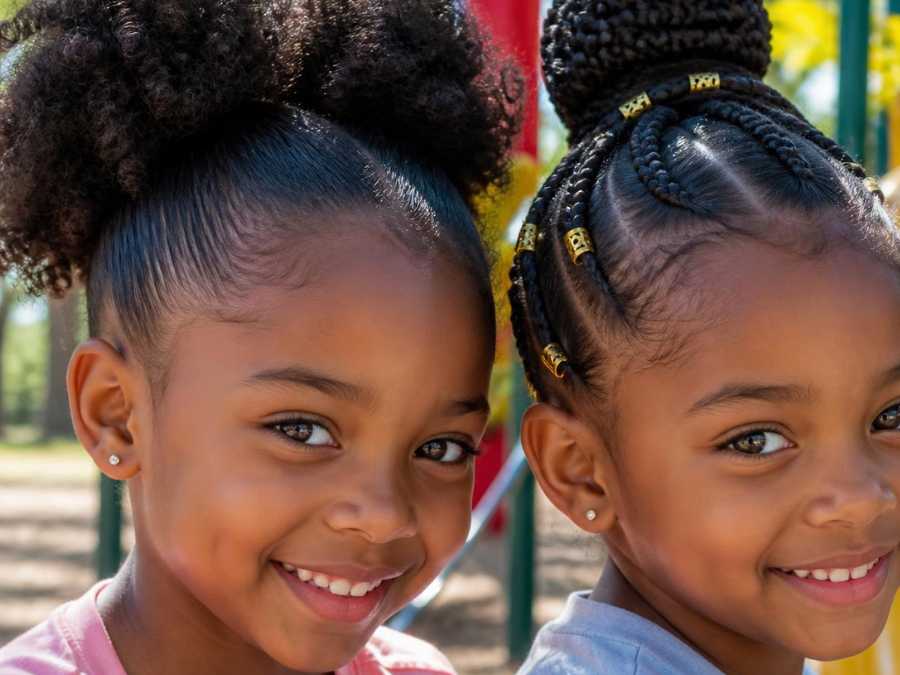
Hairstyles that repeatedly pull on the same areas can place unnecessary stress on the hair.
This is particularly important around the hairline, but tension can affect other areas as well.
A protective hairstyle should feel comfortable.
If your child complains that a hairstyle hurts, it is too tight.
Excessive Heat
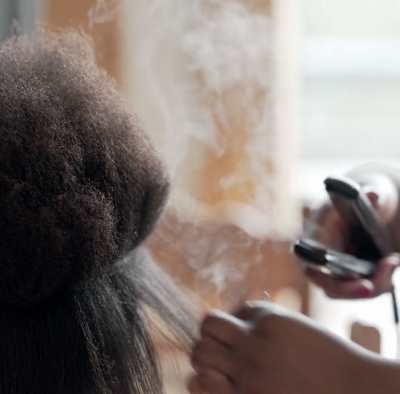
Frequent use of hot styling tools can contribute to dryness and damage.
For children, there is rarely a need to rely heavily on heat styling.
Gentle, low-manipulation hairstyles are usually a better choice for everyday hair care.
Why the Ends Need Extra Attention
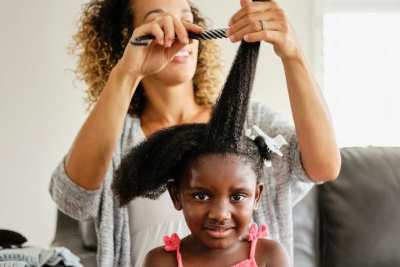
The ends of your child’s hair have been exposed to the environment longer than the newer hair closer to the scalp.
They are also the part most likely to rub against clothing and bedding.
For this reason, the ends often need more protection than the rest of the hair.
This is one reason hairstyles that tuck the ends away can be useful.
Twists, braids, buns, and other gentle protective styles can reduce the amount of friction the ends experience during everyday activities.
How Moisture Helps Protect the Hair

Moisture is an important part of caring for natural hair.
When your child’s hair becomes excessively dry, detangling and styling can become more difficult.
A consistent moisturizing routine can help keep the hair softer and easier to manage.
However, moisturizing doesn’t mean soaking the hair in products every day.
A simple routine may include lightly misting the hair with water or a suitable moisturizing product, followed by gentle styling when necessary.
The right frequency depends on your child’s hair and how quickly it becomes dry.
Gentle Detangling Makes a Difference
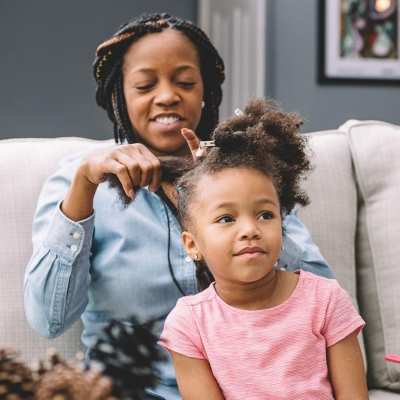
One of the most important habits for preventing unnecessary damage is learning how to detangle gently.
Instead of starting at the roots and pulling a comb through the entire section, work gradually from the ends toward the roots.
Separate larger tangles with your fingers first.
Then use an appropriate detangling tool while the hair has enough slip to make the process easier.
If the comb repeatedly gets stuck, don’t force it.
Add more moisture or conditioner and work through the section gradually.
Kiddies Hair Hub Parent Corner
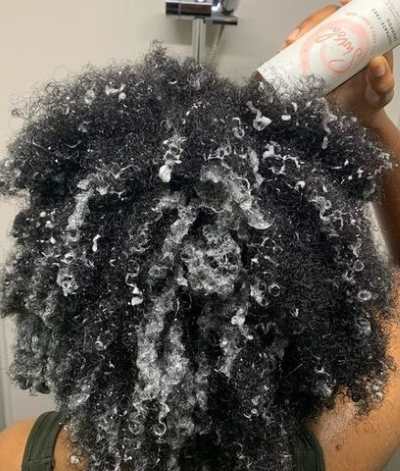
If your child dislikes wash day, don’t assume they simply don’t like having their hair done.
Sometimes the problem is discomfort caused by dry hair, aggressive detangling, or a hairstyle that pulls too tightly.
Making hair care gentler can completely change the experience.
Your goal isn’t to finish as quickly as possible.
Your goal is to care for the hair without causing unnecessary discomfort or damage.
Quick Win
The next time you detangle your child’s hair, divide it into several manageable sections instead of trying to work through the entire head at once.
Smaller sections allow you to identify tangles more easily and reduce the temptation to pull through difficult knots.
Protecting the Ends During Everyday Activities
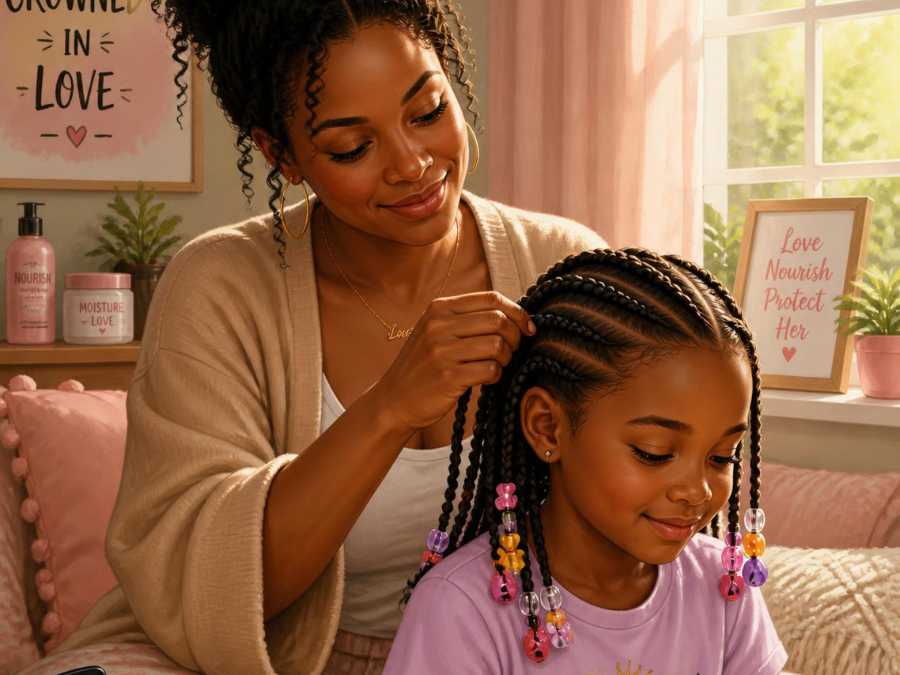
Children are active, and their hair naturally comes into contact with many surfaces throughout the day.
The ends can rub against shirts, jackets, car seats, backpacks, and other materials. Over time, repeated friction may contribute to dryness and mechanical damage.
This is why protecting the ends is an important part of how to prevent split ends in children’s natural hair.
You don’t need to keep your child’s hair hidden all the time. Instead, choose hairstyles that reduce unnecessary rubbing when possible.
Styles such as twists, braids, buns, and tucked-away ponytails can help limit how much the ends are exposed.
For everyday wear, choose hairstyles that are secure without being tight.
Protecting Children’s Hair at Night
Bedtime is an often-overlooked part of children’s hair care.
Your child’s hair can spend several hours rubbing against a pillow while they sleep. For dry or fragile natural hair, repeated friction can contribute to tangling and dryness.
A satin bonnet, satin scarf, or satin pillowcase can help reduce friction.
If your child doesn’t like wearing a bonnet, a satin pillowcase can be an easier alternative.
The important thing is finding a bedtime option your child will actually use consistently.
Do Protective Hairstyles Prevent Split Ends?
Protective hairstyles can help reduce the amount of manipulation and friction the ends experience, but they aren’t a guarantee against split ends.
A protective style should still be installed and maintained gently.
For example, keeping braids or twists in for too long can lead to tangling and difficult takedown.
Likewise, a hairstyle that places excessive tension on the hair isn’t protective simply because the ends are covered.
A good protective style should:
- Feel comfortable.
- Avoid excessive tension.
- Allow the scalp to be cared for.
- Keep the ends reasonably protected.
- Be removed before the hair becomes excessively tangled.
Protective styling works best when it is part of an overall healthy hair routine.
Choosing Gentle Hairstyles
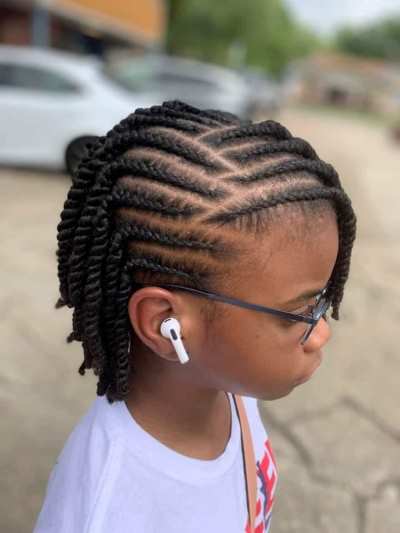
When selecting a hairstyle for your child, consider more than how it looks.
Ask yourself whether the style is comfortable and whether it can be maintained without excessive manipulation.
For example, two-strand twists can be a practical choice because they reduce daily combing.
Braids can also help keep the ends contained.
A simple puff may be appropriate for a quick day, while a gentle protective style may be more convenient when your child has a busy week ahead.
There is no single hairstyle that is best for every child.
How Often Should Children’s Hair Be Trimmed?
There isn’t a universal trimming schedule that applies to every child.
Hair grows at different rates, and children’s routines vary.
Instead of trimming simply because a certain number of weeks has passed, pay attention to the condition of the ends.
You may want to consider a trim when you notice:
- Persistent split ends.
- Excessive fraying.
- Rough or uneven ends.
- Repeated tangling at the ends.
- Breakage that continues despite gentle care.
A professional stylist experienced with children’s natural hair can help determine whether a trim is appropriate.
Can Split Ends Be Repaired?
Unfortunately, once a hair strand has actually split, hair products cannot permanently fuse the strand back together.
Conditioners and other products can make the hair feel smoother and temporarily improve its appearance, but they do not reverse structural damage.
If the ends are significantly split, trimming the damaged portion is the practical way to remove it.
This is why prevention and early attention are more useful than waiting until the ends are severely damaged.
Everyday Habits That Can Damage Children’s Hair
Sometimes hair damage comes from small habits that don’t seem significant on their own.
For example, repeatedly pulling a brush through dry, tangled hair can place unnecessary stress on the strands.
Other habits worth reconsidering include:
- Brushing the hair too aggressively.
- Detangling without enough moisture or slip.
- Using very tight hair accessories.
- Repeatedly styling the same section.
- Using excessive heat.
- Leaving protective styles installed for too long.
- Sleeping without any friction-reducing protection.
- Pulling apart knots instead of gently loosening them.
Changing even a few of these habits can make your child’s routine much gentler.
The Importance of Hair Accessories
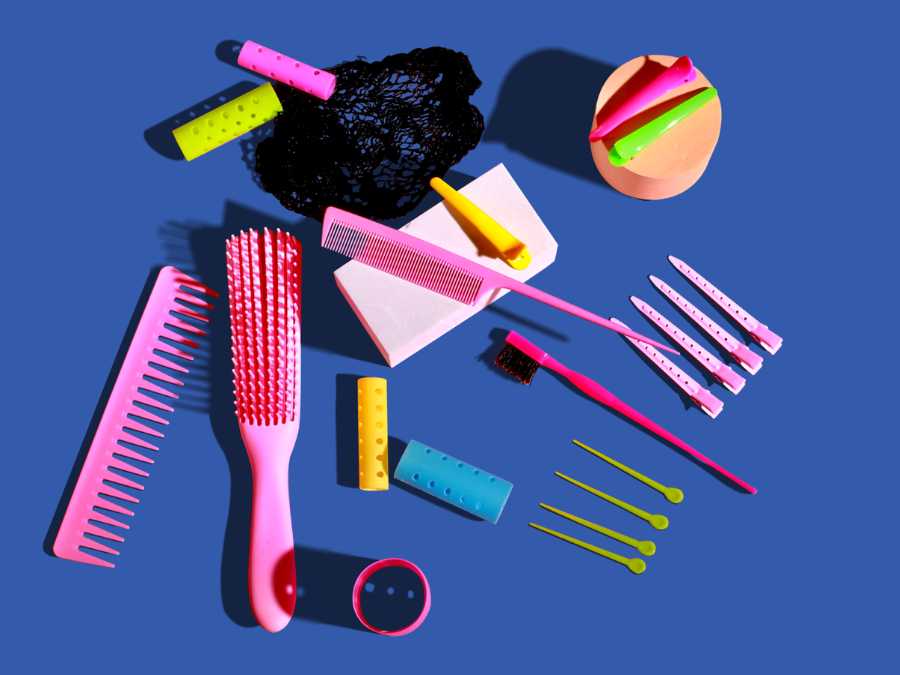
Hair accessories can either help or create problems.
Choose accessories that are designed to be gentle on children’s hair.
Soft fabric-covered elastics, satin scrunchies, and smooth clips can be better choices than rough accessories that snag or pull on the hair.
When removing an accessory, don’t pull it quickly through the hair.
Take your time and gently release the strands.
A few extra seconds can prevent unnecessary tugging.
Kiddies Hair Hub Parent Corner
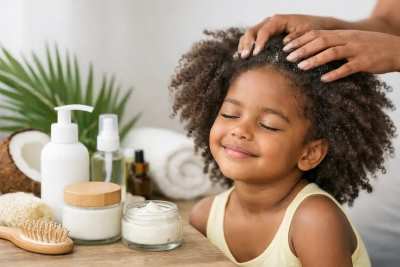
You don’t need a complicated routine to care for your child’s natural hair.
In fact, adding too many products and styling steps can sometimes make hair care more difficult.
Focus on the basics:
Moisture. Gentle handling. Low manipulation. Protection. Consistency.
Those simple habits can go a long way toward helping your child’s hair remain manageable and reducing avoidable damage.
Quick Win
Look at the hair accessories your child uses most often.
If any elastic, clip, or headband catches on the hair when you remove it, replace it with something smoother and gentler.
Small changes like this can reduce repeated mechanical stress over time.
A Simple Routine for Healthier Ends
You don’t need a complicated routine to protect your child’s hair.
Consistency is more important than having a large collection of products.
A simple routine can look like this:
On Wash Day
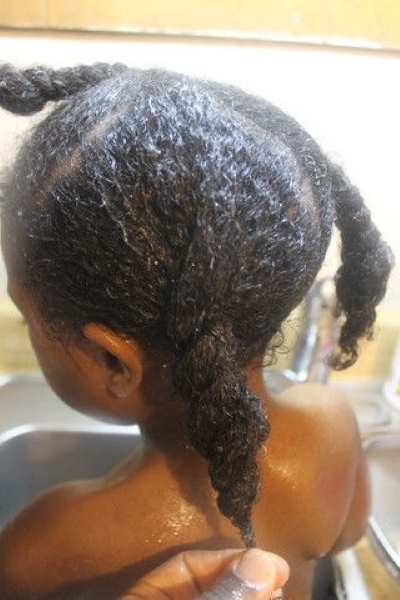
Start by cleansing the scalp and hair gently. Follow with a moisturizing conditioner and take your time when detangling.
Work in sections rather than trying to comb through the entire head at once.
Once the hair is clean and conditioned, gently squeeze out excess water and apply your usual moisturizing products.
During the Week
Pay attention to how the hair feels.
If it feels dry, lightly moisturize it rather than waiting until it becomes difficult to manage.
Avoid restyling the hair unnecessarily.
If the hairstyle still looks good and your child’s hair is comfortable, there may be no reason to redo it.
At Bedtime

Protect the hair from unnecessary friction.
A satin pillowcase can be a simple option, particularly if your child doesn’t like wearing a bonnet.
If your child is comfortable with a satin bonnet or scarf, that can also be incorporated into the bedtime routine.
Before Restyling
Before creating a new hairstyle, gently take down the previous style and check the ends.
If you notice excessive tangling, dryness, or fraying, give the hair some extra care before installing another style.
Signs Your Child’s Ends Need Attention
Knowing what healthy ends look and feel like can help parents notice problems earlier.
You may want to pay closer attention if your child’s ends:
- Feel consistently rough.
- Tangle more easily than usual.
- Look noticeably frayed.
- Break frequently during gentle styling.
- Appear much thinner than the rest of the hair.
- Have visible splits.
One sign by itself doesn’t necessarily mean there is serious damage.
However, repeated problems are worth addressing.
If you’re unsure whether your child needs a trim or if the hair appears unusually fragile, a qualified hairstylist experienced with children’s natural hair can assess it.
What Parents Should Avoid
When learning how to prevent split ends in children’s natural hair, it can be tempting to focus only on what you should do.
It’s equally important to know what to avoid.
Try not to:
Detangle Dry, Severely Tangled Hair
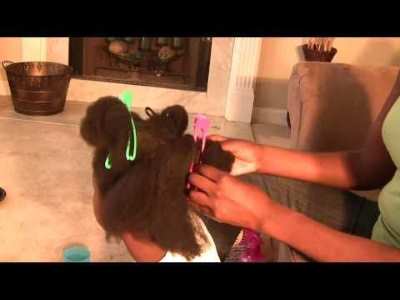
Dry, tangled hair can be difficult to manipulate gently.
Adding appropriate moisture and working through small sections can make detangling easier.
Keep Hairstyles Too Tight
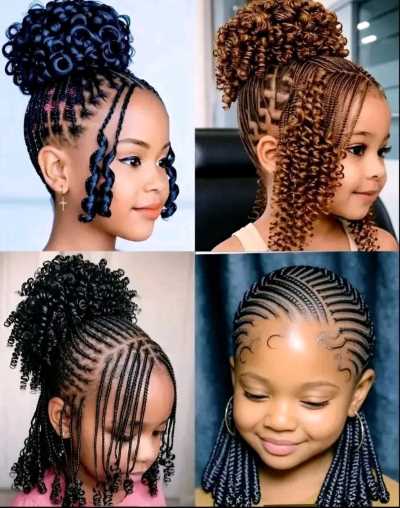
A hairstyle shouldn’t cause pain or discomfort.
If your child says a style hurts, don’t ignore the complaint simply because the hairstyle looks neat.
Chase Length at the Expense of Healthy Hair
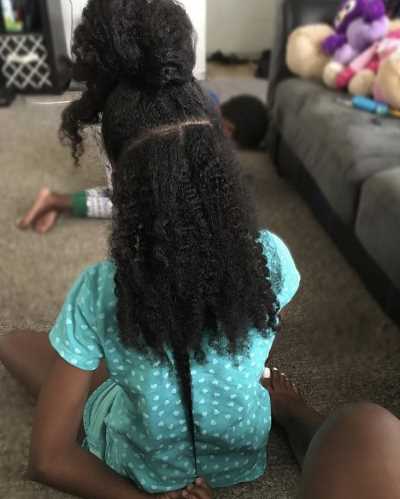
Longer hair isn’t necessarily healthier hair.
The goal should be retaining healthy hair, not keeping every strand regardless of its condition.
Sometimes trimming damaged ends is better than allowing the damage to continue.
Use Heat Without a Good Reason
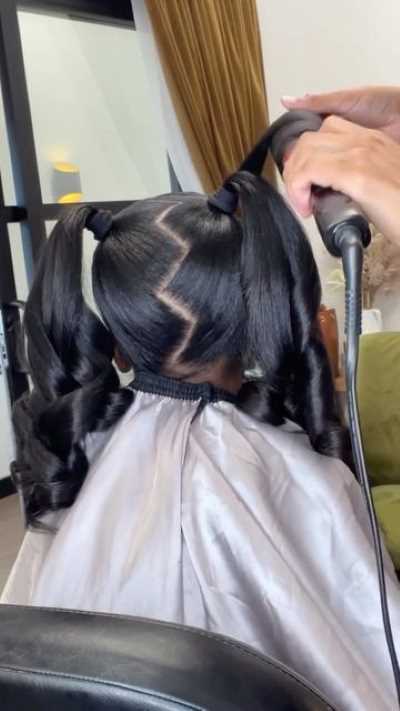
Children’s natural hair usually doesn’t need frequent heat styling.
Low-manipulation styles can make it easier to care for the hair without relying heavily on heat.
Does Cutting Children’s Hair Make It Grow Faster?
No.
Trimming the ends doesn’t make hair grow faster from the scalp.
Hair growth occurs at the follicle, beneath the scalp.
However, removing damaged ends can make the hair look healthier and may help prevent existing splits from traveling farther up the strand.
This is why trimming can be useful for maintaining the condition of the ends even though it doesn’t change the rate at which hair grows.
Frequently Asked Questions
How can I prevent split ends in my child’s natural hair?
Focus on gentle detangling, adequate moisture, reduced friction, low-manipulation hairstyles, and careful handling of the ends.
Avoid excessive heat and hairstyles that create unnecessary tension.
What causes split ends in children’s hair?
Split ends can develop from repeated mechanical stress, dryness, friction, heat, chemical processing, and rough handling.
Everyday activities such as sleeping, playing, brushing, and wearing certain clothing can also contribute to wear on the ends.
Should I trim my child’s natural hair?
Trimming can be helpful when the ends are visibly damaged, split, or excessively frayed.
There isn’t one trimming schedule that is right for every child.
Can oil prevent split ends?
Oil can help reduce friction and improve how the hair feels, but it cannot permanently repair an already split strand.
Use hair products according to your child’s needs rather than relying on heavy amounts of oil.
Is protective styling good for children’s hair?
Gentle protective styles can reduce daily manipulation and help keep the ends contained.
However, the style should not be tight, uncomfortable, or left installed longer than the hair can reasonably tolerate.
Why does my child’s hair keep breaking even though I moisturize it?
Moisture is only one part of healthy hair care.
Breakage can also be affected by excessive manipulation, tight hairstyles, rough detangling, friction, heat, tangling, or damaged ends.
If breakage continues despite gentle care, consider having the child’s hair and scalp assessed by a qualified professional.
Kiddies Hair Hub Parent Corner
Healthy children’s hair doesn’t require perfection.
There will be days when your child’s hair gets tangled after playing outside. There will be mornings when the hairstyle doesn’t turn out exactly as planned.
There may even be times when trimming is necessary.
That’s completely normal.
What matters is developing gentle habits that reduce unnecessary damage over time.
When you consistently moisturize, detangle carefully, protect the ends, and avoid excessive tension, you give your child’s natural hair a better chance to retain length and remain manageable.
Quick Takeaways
- Split ends are a form of hair-shaft damage and cannot be permanently repaired with products.
- Gentle detangling can reduce unnecessary mechanical stress.
- Moisturizing helps keep natural hair manageable.
- Protective hairstyles can reduce manipulation when installed properly.
- Satin at bedtime can help reduce friction.
- Avoid hairstyles that cause pain or excessive tension.
- Excessive heat can contribute to hair damage.
- Trimming removes damaged ends but does not make hair grow faster.
- Healthy hair habits matter more than complicated routines.
Conclusion
Learning how to prevent split ends in children’s natural hair starts with understanding that healthy hair care doesn’t have to be complicated.
Children’s hair is exposed to everyday friction, styling, detangling, weather, clothing, and play.
While some wear and tear is unavoidable, parents can reduce unnecessary damage through simple, consistent habits.
Gentle handling, proper moisture, careful detangling, protective styling, and nighttime protection can all contribute to healthier-looking ends.
Most importantly, pay attention to your child’s hair rather than following a rigid routine simply because it works for someone else.
Every child’s hair is different.
A routine that keeps your child’s hair comfortable, manageable, and healthy is the routine worth keeping.
At Kiddies Hair Hub, our goal is to make children’s natural hair care easier for parents by providing practical information that works in everyday family life.
Baby girl hairstyles for 4c short hair
Easy Back to school hairstyle Ideas
How to Prevent Hair Breakage in Children’s Natural Hair: Practical Tips for Stronger, Healthier Hair
How to Prevent Split Ends in Children’s Natural Hair
How to Prevent Hair Breakage in Children’s Natural Hair: Practical Tips for Stronger, Healthier Hair
How to Prevent Hair Breakage in Children’s Natural Hair: Practical Tips for Stronger, Healthier Hair
How to Create a Weekly Hair Care Routine for Your Child That Actually Works
Best Protective Hairstyles for Toddlers: Gentle Styles That Keep Little Hair Healthy
How to Detangle Children’s Hair Without Tears: A Gentle Guide for Parents
How Long Should Children Keep Protective Hairstyles? A Parent’s Guide to Healthy Timing
Leave a Reply