How to wash braids for kids
How to Wash Braids and Protective Styles Without Ruining Them
Knowing how to wash braids for kids is essential for keeping the scalp clean while protecting the hairstyle.
The key is to cleanse the scalp gently, avoid excessive rubbing, rinse thoroughly, and allow the braids to dry completely before styling.https://kiddieshairhub.com/wp-admin/post.php?post=342&action=edit
How to wash braids for kids
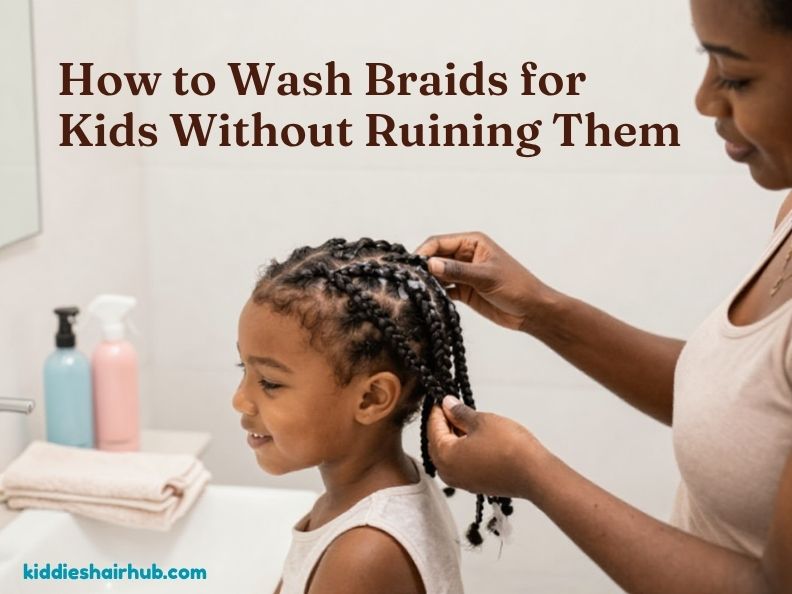
Protective hairstyles make life easier for many families.
Braids, twists, and cornrows can reduce daily styling time, help minimize breakage, and keep children’s natural hair neatly tucked away for days or even weeks.
But one question many parents ask is whether they should wash their child’s hair while it’s still braided.
Some worry that washing will make the hairstyle frizzy.
Others avoid washing altogether because they don’t want to ruin freshly installed braids.
The truth is that leaving the scalp unwashed for too long can lead to product buildup, itching, unpleasant odors, and an unhealthy scalp.
A clean scalp creates a healthier environment for natural hair, even while it’s in a protective style.
Learning how to wash braids for kids properly allows you to keep your child’s scalp fresh without undoing all the work that went into installing the hairstyle.
In this guide, you’ll learn when to wash protective styles, the safest way to cleanse your child’s scalp, and the simple habits that help braided hairstyles stay neat for as long as possible.
If your child is already wearing a protective style, you may also find our article on 15 Protective Hairstyles for Black Kids That Help Reduce Breakage helpful for choosing styles that are both practical and healthy for natural hair.
Should You Wash Braids?
Yes.
One of the biggest myths about protective styling is that braids should never get wet.
In reality, natural hair and the scalp continue to produce sweat, oils, and dead skin cells, whether the hair is loose or braided.
Skipping wash day for several weeks can lead to:
- Product buildup.
- Itchy scalp.
- Unpleasant odors.
- Flaking.
- Increased discomfort.
- An unhealthy scalp environment.
Washing the scalp carefully helps remove dirt while allowing your child’s hair to remain healthy throughout the life of the hairstyle.
How Often Should You Wash Braids?
There isn’t one schedule that works for every child.
The ideal timing depends on several factors, including:
- Your child’s activity level.
- The season.
- How much product has been used.
- Whether your child sweats frequently.
- The condition of the scalp.
Many parents find that gently cleansing the scalp every one to two weeks works well for children wearing braids or twists.
Rather than watching the calendar alone, pay attention to signs that the scalp needs cleaning, such as itching, visible buildup, or an unusual odor.
What You’ll Need Before You Start
Gather everything before washing so the process goes smoothly.
You’ll need:
- A gentle, child-friendly shampoo.
- A spray bottle or applicator bottle.
- Lukewarm water.
- A microfiber towel or soft cotton T-shirt.
- Leave-in conditioner.
- Lightweight oil if needed for the scalp.
Having everything ready helps reduce the amount of time your child’s hair stays wet.
Step 1: Gently Wet the Hair
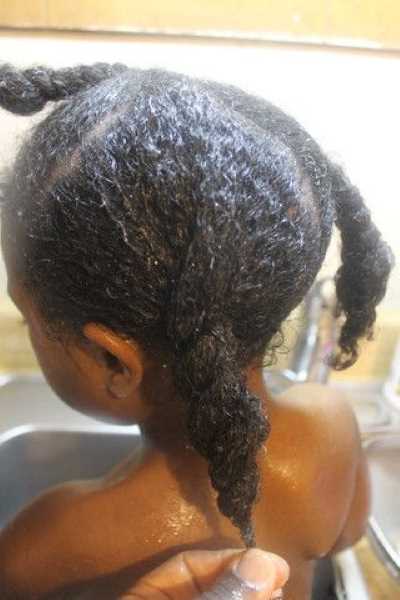
Start by thoroughly wetting the braids with lukewarm water.
Avoid using very hot water, which may dry out both the hair and scalp.
Let the water soak through the braids until the scalp is fully damp.
Don’t rush this step.
Water helps loosen dirt and makes shampoo spread more evenly.
Step 2: Focus on the Scalp
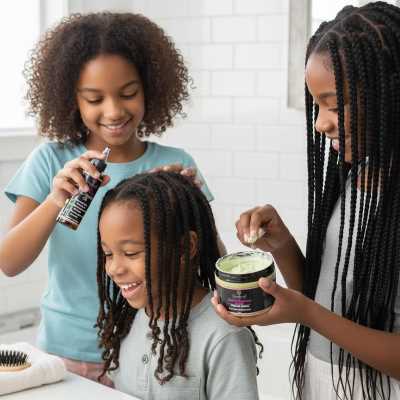
When learning how to wash braids for kids, remember that the scalp should receive most of your attention.
Apply a small amount of diluted shampoo directly to the scalp.
Using your fingertips, gently massage between the braids.
Avoid using your fingernails, which may irritate the scalp.
The goal is to lift dirt and buildup without disturbing the hairstyle.
Step 3: Let the Shampoo Flow Through the Braids
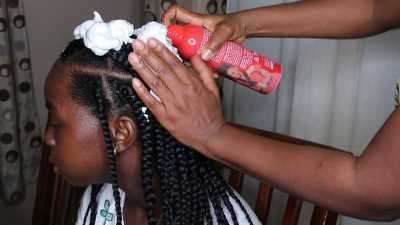
As you rinse, the shampoo running through the braids will help clean the hair strands.
There’s usually no need to scrub the length of the braids aggressively.
Gentle rinsing is often enough to remove dirt while helping the hairstyle stay neat.
Kiddies Hair Hub Parent Corner
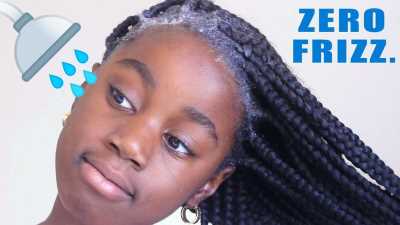
Many parents are afraid that washing braids will ruin them.
In reality, a little frizz after washing is completely normal.
A clean, healthy scalp is far more important than perfectly smooth braids.
Remember, protective styles are meant to protect your child’s hair, not prevent proper hair care.
Quick Win
If your child has sensitive skin, test any new shampoo on a small area of the scalp before using it during wash day. Choosing gentle products can help reduce irritation while keeping the scalp clean.
Step 4: Rinse Thoroughly
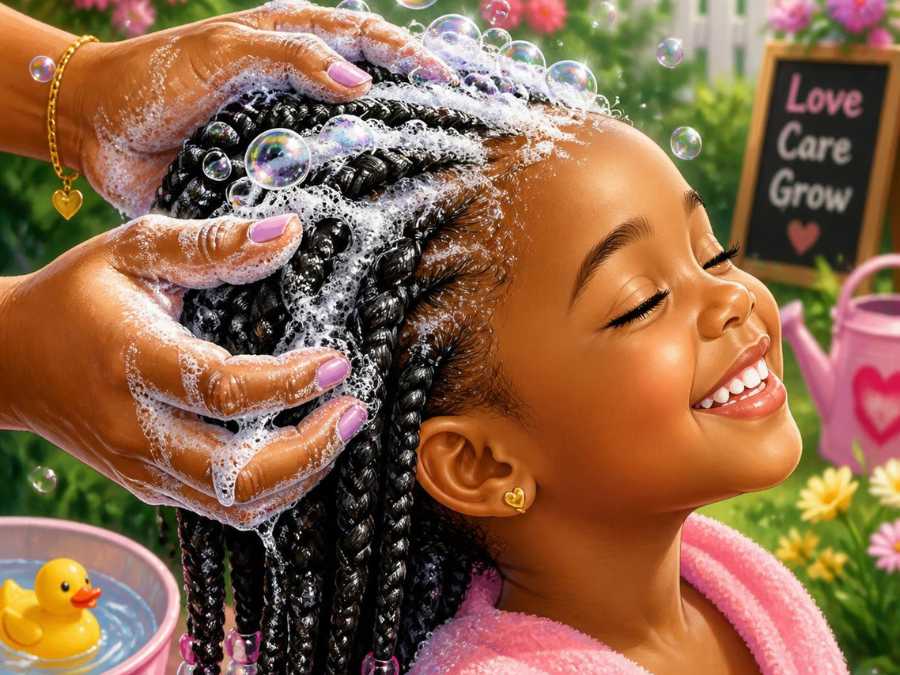
After cleansing the scalp, rinse the hair thoroughly with lukewarm water.
Take your time during this step because shampoo residue left behind can cause itching, dryness, and product buildup.
Allow the water to run through each section of the braids until the water runs clear.
Avoid twisting or wringing the braids while rinsing, as this can create unnecessary frizz and loosen the hairstyle.
Step 5: Should You Use Conditioner?

Yes, but use it carefully.
Many parents assume conditioner should be skipped when a child is wearing braids, but natural hair still benefits from moisture.
Instead of applying a heavy conditioner throughout the braids, use a lightweight moisturizing conditioner and focus on the hair itself rather than coating the scalp.
Apply only a small amount and rinse thoroughly.
Heavy products may be difficult to remove and can leave behind buildup that attracts dirt.
Step 6: Remove Excess Water Gently
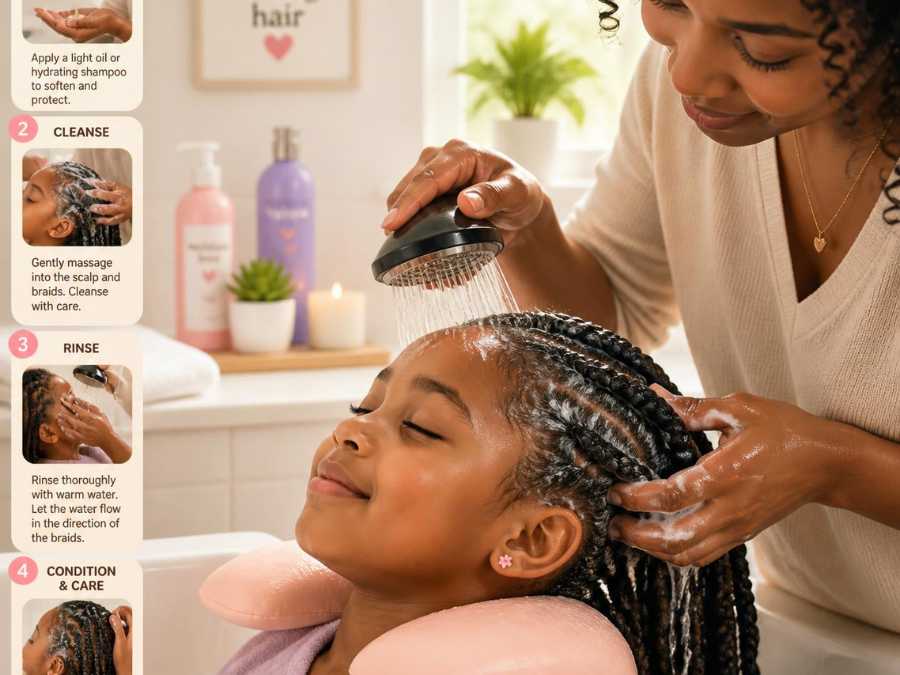
Once the braids have been rinsed, avoid rubbing them with a regular bath towel.
Instead, gently squeeze out excess water using your hands before wrapping the hair in a microfiber towel or a soft cotton T-shirt.
This simple step helps reduce frizz while protecting the cuticle from unnecessary friction.
Step 7: Dry the Hair Completely
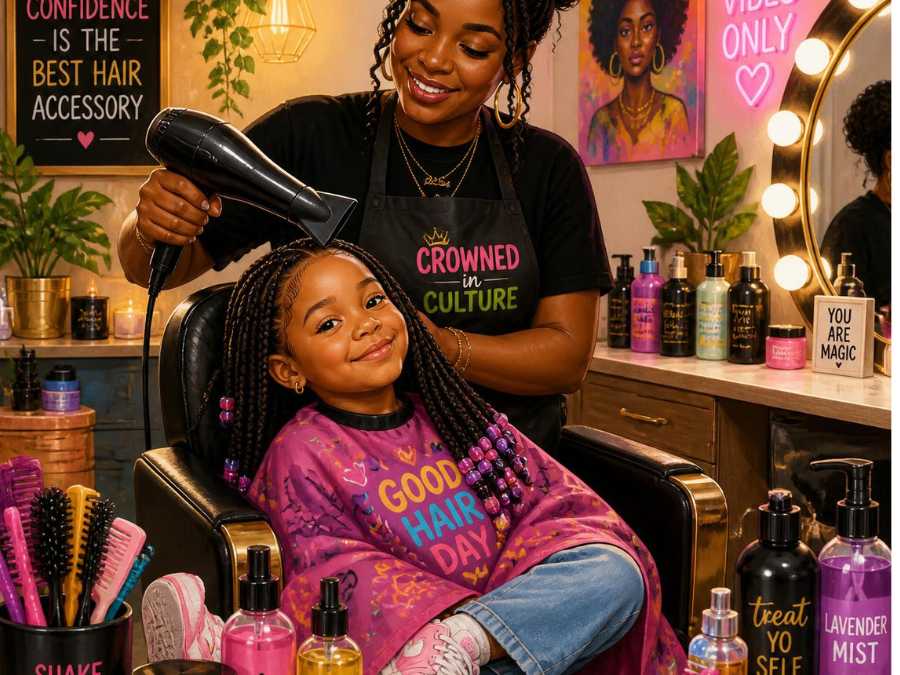
One of the most important parts of learning how to wash braids for kids is understanding the importance of proper drying.
Braids hold moisture longer than loose hair because several strands are woven together.
If the hair remains damp for many hours, it can develop an unpleasant odor and create an unhealthy environment for the scalp.
Whenever possible, allow the hair to air dry in a well-ventilated area.
If you’re short on time, you can use a blow dryer on a cool or low-heat setting while keeping it moving to avoid concentrating heat in one spot.
Before your child goes to bed, check that the roots and the middle of the braids are completely dry.
How to Moisturize Braids After Washing
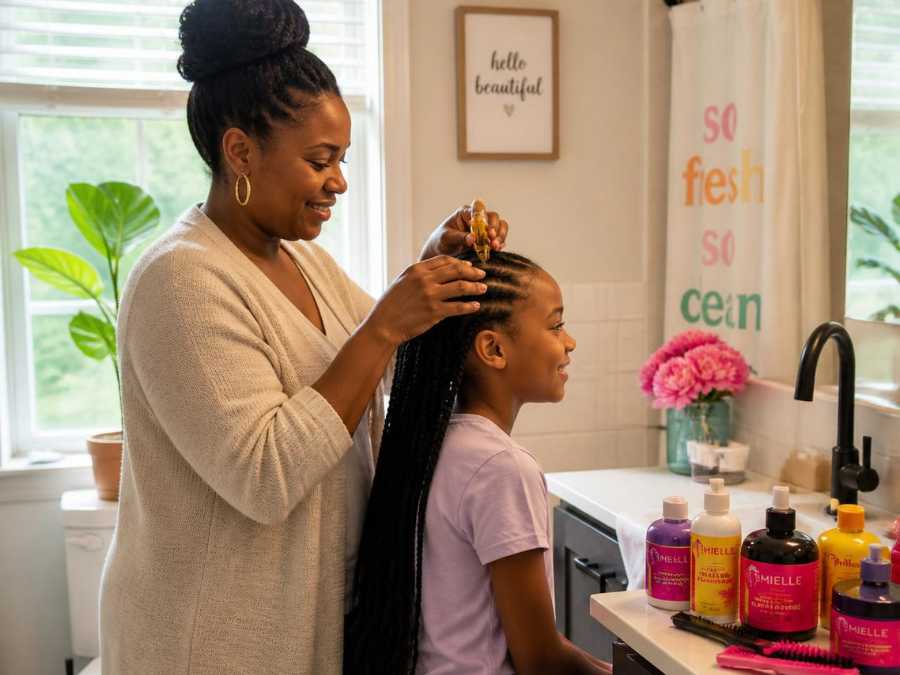
Washing removes dirt and sweat, but it can also reduce some of the hair’s natural oils.
After the braids are dry, lightly moisturize the hair to help keep it soft and manageable.
You can:
- Apply a lightweight leave-in conditioner.
- Mist the hair lightly with water if it feels dry.
- Use a small amount of lightweight oil on the scalp if needed.
- Focus on keeping the hair hydrated without making it greasy.
Avoid applying thick creams or heavy oils every day, as they can build up quickly inside braided styles.
Common Mistakes That Ruin Braids
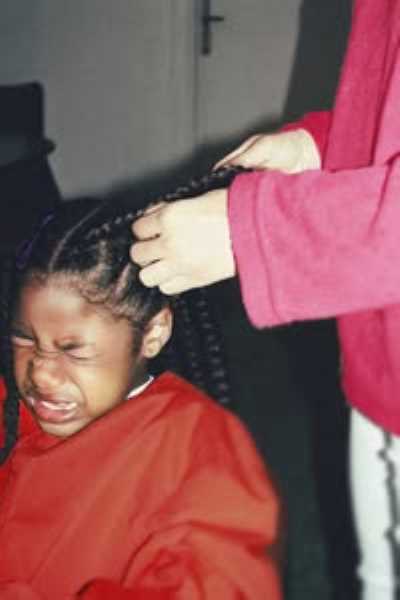
Parents often have good intentions, but a few simple mistakes can shorten the life of a protective style.
Here are some of the most common ones:
- Scrubbing the braids too aggressively.
- Using fingernails instead of fingertips on the scalp.
- Applying too much shampoo.
- Leaving shampoo residue behind.
- Using very hot water.
- Going to bed before the braids are fully dry.
- Applying heavy products that leave buildup.
- Pulling on loose braids while drying.
Gentle handling goes a long way toward keeping braids looking neat.
How to Help Braids Last Longer After Washing
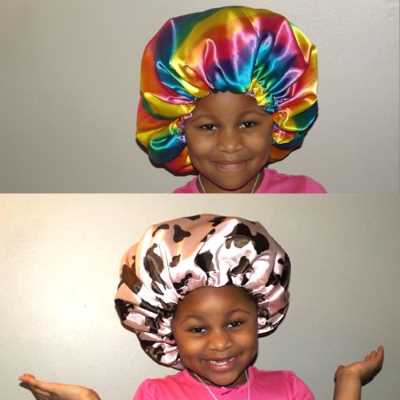
With a few simple habits, your child’s protective style can stay fresh long after wash day.
Try these tips:
- Cover the hair with a satin bonnet or scarf every night.
- Encourage your child to avoid pulling on the braids.
- Refresh the edges only when necessary.
- Moisturize lightly instead of applying heavy products.
- Keep the scalp clean without over-washing.
- Remove the hairstyle once it begins to look excessively loose or matted.
These small habits can help extend the life of the hairstyle while supporting healthy natural hair.
When Should You Remove the Braids?
Protective styles are not meant to stay in forever.
It may be time to remove your child’s braids if you notice:
- Excessive frizz.
- Significant new hair growth.
- Tangling at the roots.
- Persistent itching after washing.
- Product buildup that no longer washes away easily.
- Loose braids that no longer protect the hair.
Removing the hairstyle at the right time helps prevent unnecessary breakage during takedown.
Kiddies Hair Hub Parent Corner
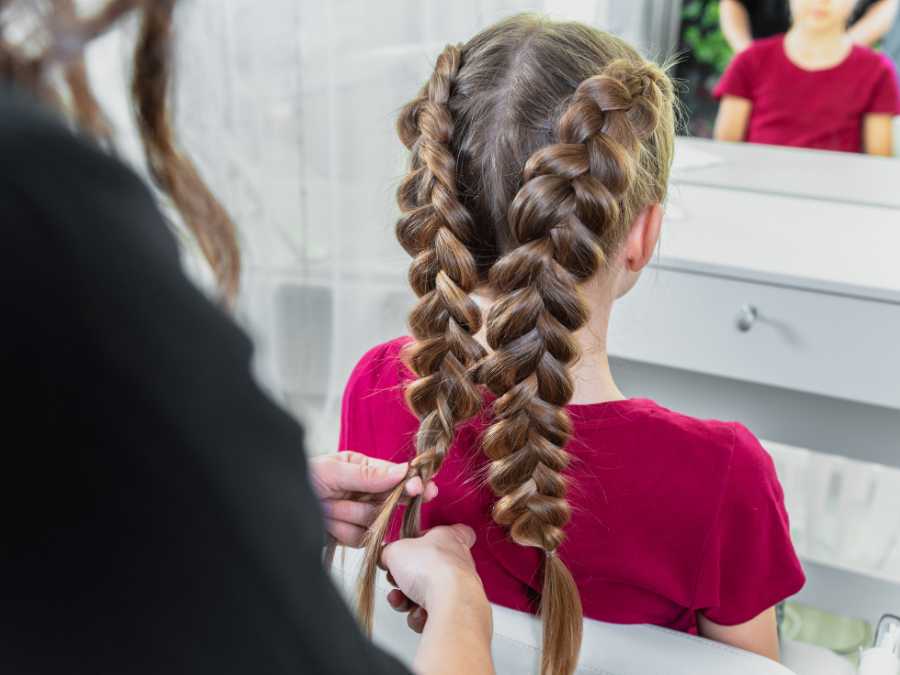
Many parents think the goal is to make braids last as long as possible.
A better goal is to keep your child’s hair and scalp healthy throughout the time the style is installed.
If washing causes a little frizz but leaves the scalp clean and comfortable, you’ve made the right choice.
Healthy hair always matters more than a perfectly neat hairstyle.
Quick Win
If your child participates in sports or spends a lot of time playing outdoors, let the scalp guide your wash schedule instead of the calendar.
A child who sweats frequently may need their braids cleansed sooner than a child with a less active routine.
Signs Your Child’s Braids Need Washing
Sometimes parents wait too long because they are afraid of disturbing the hairstyle.
However, your child’s scalp will usually give you signs when it needs attention.
Look out for:
Itchy Scalp
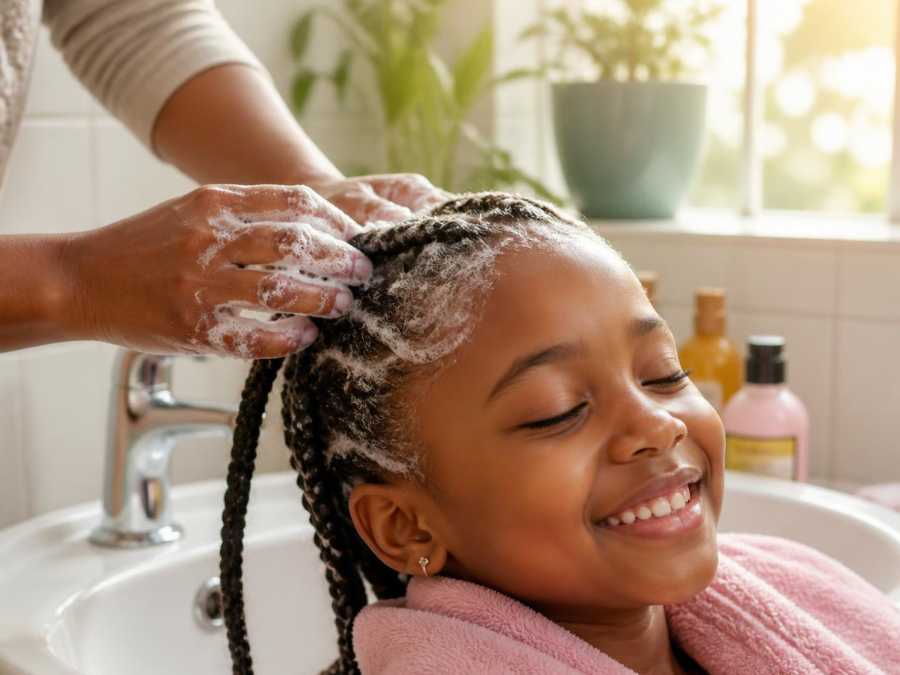
Occasional itching can happen, but frequent scratching may be a sign of sweat, buildup, or dryness.
Visible Product Buildup
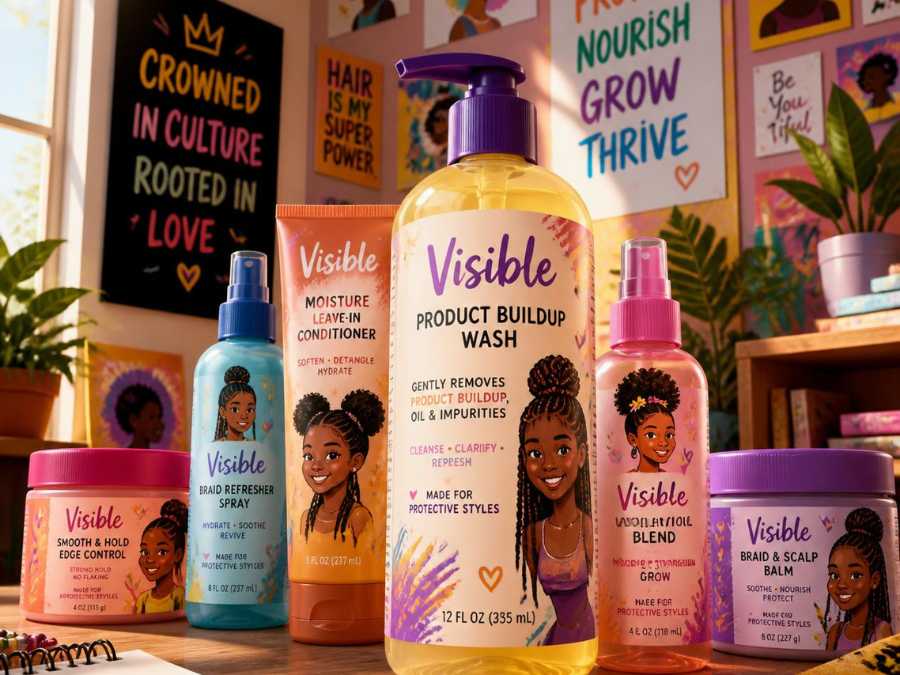
If you notice white residue, flakes, or a sticky feeling around the roots, it may be time for a gentle cleanse.
Unpleasant Smell
A clean scalp should not have a strong odor. An unusual smell can mean sweat, moisture, or product buildup needs to be removed.
Excessive Sweating
Children who participate in sports, outdoor activities, or active play may need their protective styles washed more frequently.
Scalp Discomfort
If your child complains that their scalp feels uncomfortable, tight, or irritated, it is worth checking whether the hair needs attention.
How to Wash Different Types of Protective Styles
Not every hairstyle requires exactly the same approach.
Washing Box Braids
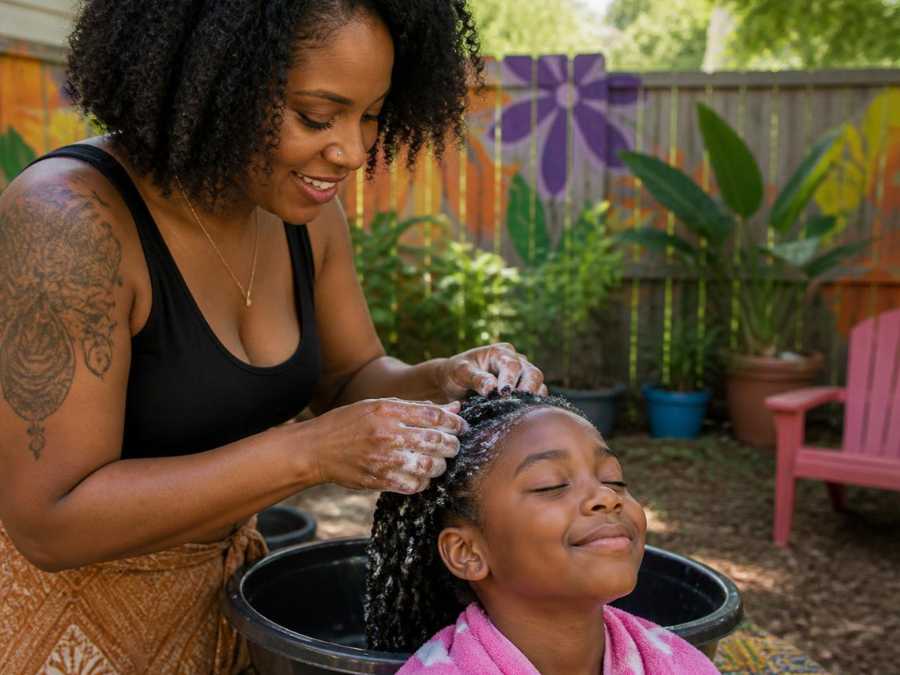
Box braids should be washed gently by focusing on the scalp.
Avoid heavy scrubbing because it can create unnecessary frizz and make the braids look older faster.
Washing Cornrows
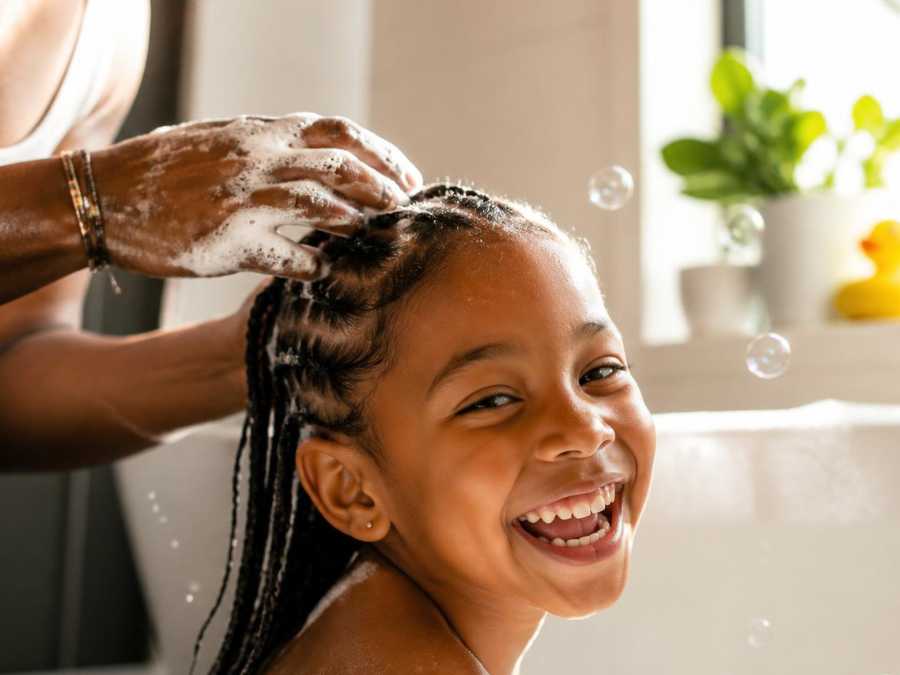
Cornrows can usually be cleansed using a diluted shampoo mixture applied directly to the scalp.
Because the hair is close to the scalp, gentle fingertip massage is usually enough.
Washing Twists
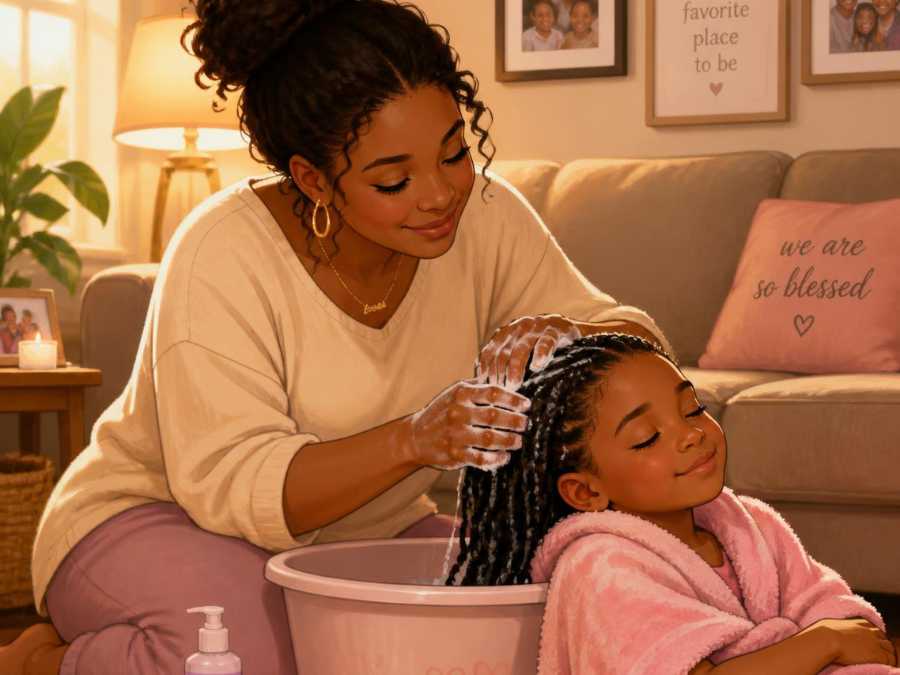
Twists are often easier to wash because they allow better access to the hair.
However, they should still be handled gently to prevent excessive unraveling.
Washing Crochet or Added Hair Styles
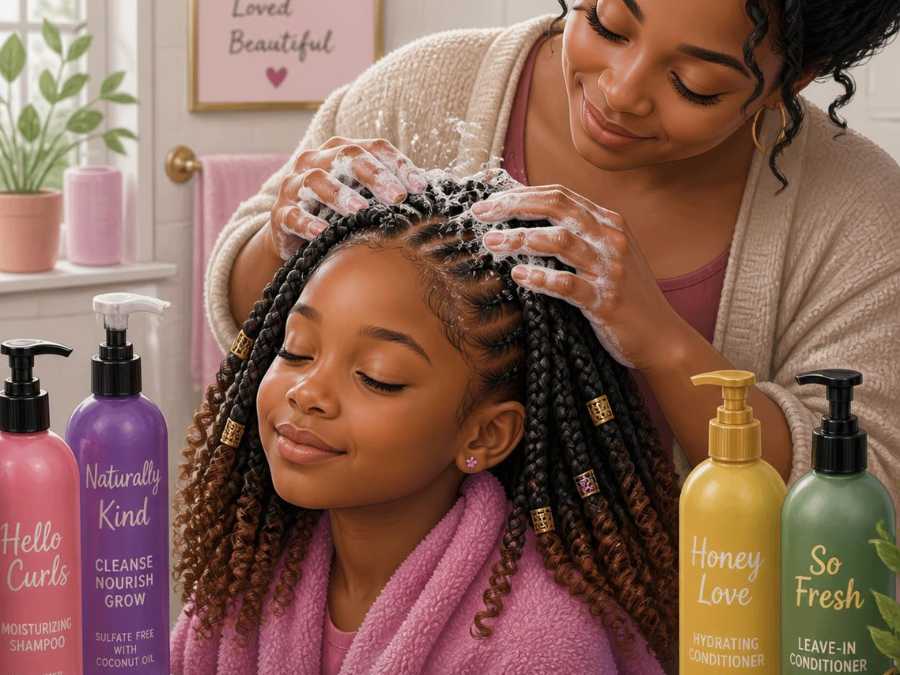
If your child’s hairstyle includes added hair, pay extra attention to drying.
Synthetic hair can hold moisture for longer, so allowing enough drying time is especially important.
Protective Style Care Guide
| Protective Style | Washing Frequency | Main Care Focus |
| Box Braids | Every 1–2 weeks or as needed | Clean scalp and proper drying |
| Cornrows | About every 1–2 weeks | Gentle cleansing around parts |
| Twists | Every 1–2 weeks | Preventing unraveling |
| Bantu Knots | As needed | Maintaining moisture |
| Mini Twists | Every 1–2 weeks | Keeping hair hydrated |
Remember that every child’s hair and routine are different.
A child who sweats daily may need a different schedule than a child who has a quieter routine.
Frequently Asked Questions
Can I wash my child’s hair immediately after installing braids?
It is usually better to wait a short period after installation, especially if the scalp feels sensitive.
Freshly installed braids may need time to settle, but your child’s comfort should always guide your decision.
Will washing braids make them frizzy?
Some frizz is normal after washing protective styles.
However, gentle washing techniques can help reduce excessive frizz while keeping the hairstyle neat.
How do I keep braids from smelling after washing?
The most important step is allowing the hair to dry completely.
Damp braids are more likely to develop unpleasant odors, so proper drying should never be skipped.
Can I oil my child’s scalp while they have braids?
Yes, but moderation is important.
Using too much oil can attract buildup and make the scalp feel heavy. A small amount is usually enough when needed.
How long can children keep protective styles?
The length of time depends on the hairstyle, maintenance routine, and the child’s hair condition.
A style should be removed when it is no longer keeping the hair healthy or comfortable.
Kiddies Hair Hub Parent Corner
Protective hairstyles are meant to make hair care easier, not eliminate hair care completely.
Your child’s natural hair still needs attention while it is braided or twisted.
A clean scalp, proper moisture, and gentle handling are the foundation of healthy hair.
When parents learn how to wash braids for kids correctly, they can enjoy the benefits of protective styling without sacrificing their child’s hair health.
Quick Takeaways
- Braids and protective styles can be washed safely with the right technique.
- Focus on cleansing the scalp rather than aggressively scrubbing the hairstyle.
- Always rinse thoroughly to prevent product buildup.
- Dry braids completely after washing.
- Moisturize lightly to maintain healthy natural hair.
- Comfort and scalp health matter more than making a hairstyle last longer.
- Protective styles should support healthy hair, not replace regular care.
Conclusion
Learning how to wash braids for kids gives parents confidence to maintain protective hairstyles while keeping their child’s natural hair healthy.
Braids, twists, and cornrows can be excellent choices for reducing daily manipulation, but they still require proper care throughout their lifespan.
The secret is balance.
Clean the scalp without being harsh. Moisturize without creating buildup. Maintain the hairstyle without ignoring the needs of the natural hair underneath.
When protective styles are cared for properly, they can help make hair routines easier while supporting healthy growth and length retention.
At Kiddies Hair Hub, we believe that healthy children’s hair starts with simple, consistent habits that fit real family life.
4C hair growth routine that actually works
HOW TO DETANGLE 4C HAIR WITHOUT BREAKAGE
How Often Should You Wash Your Child’s Natural Hair? A Simple Guide for Parents
How to Moisturize Children’s Natural Hair Without Making It Greasy
How to Choose the Right Protective Hairstyle for Your Child’s Hair Type
Why Protective Hairstyles Help Children Retain Healthier Hair
How to Wash Braids and Protective Styles Without Ruining Them
How to Choose the Right Protective Hairstyle for Your Child’s Hair
How to Make Wash Day Easier for Kids: A Calm, Simple Routine Parents Can Actually Follow
How to Prevent Hair Breakage in Children’s Natural Hair: Practical Tips for Stronger, Healthier Hair
Leave a Reply